• Like many middle-aged couples, we love to try adventure activities, but only if we are confident they are safe and comfortable. We avoid anything that seems too strenuous or risky. With this in mind, we chose four activities to try, and I’m happy to say they were all as adventurous, safe, and comfortable as we had hoped.

    Jet Ski

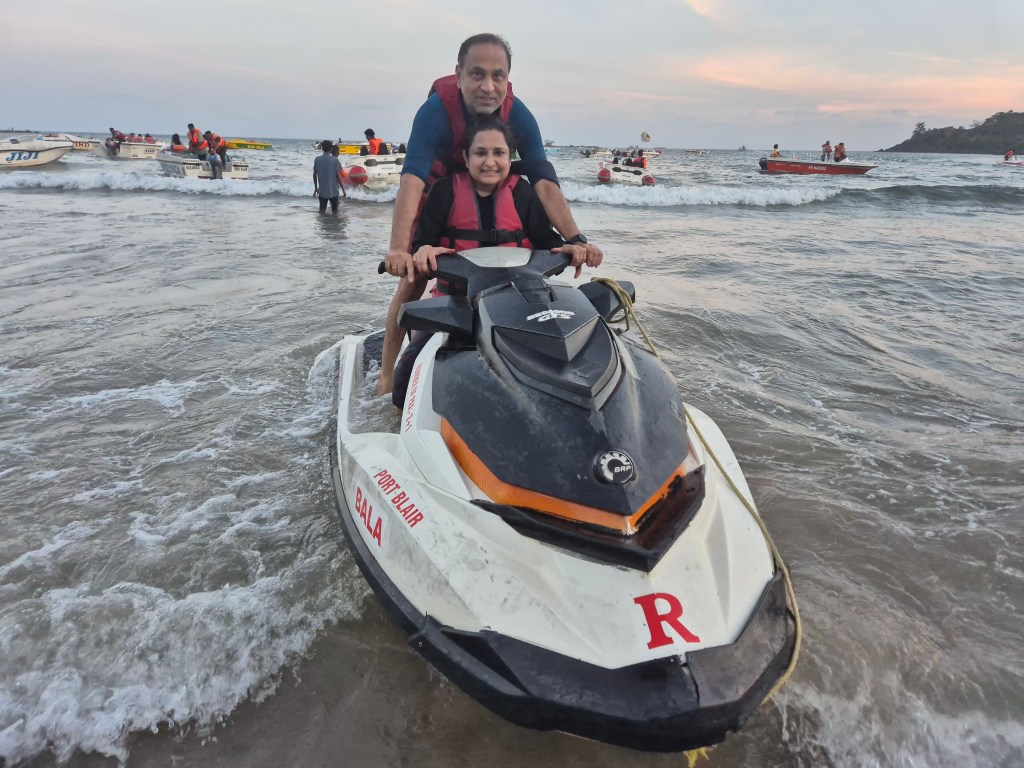
    We went jet skiing at Corbyn’s Cove Beach. It was a short, high-speed ride across the ocean with a professional. You get to ride the ski yourself, but the guide is right there to prevent any accidents if you lose control. It was safe and exciting.
    Snorkeling

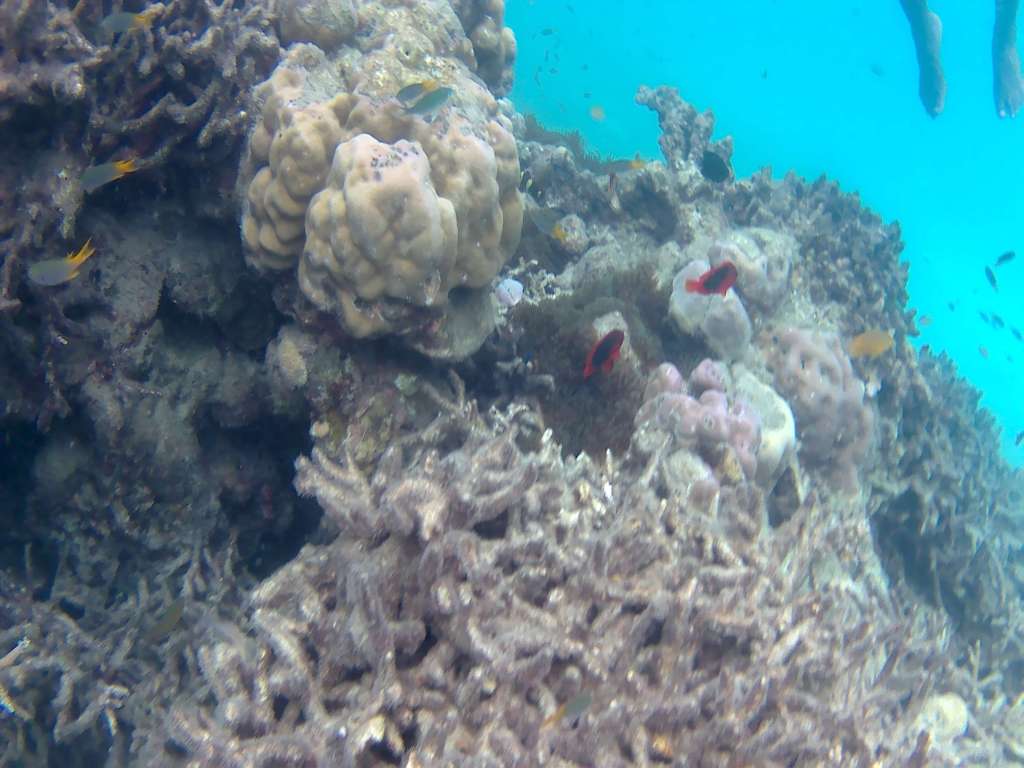
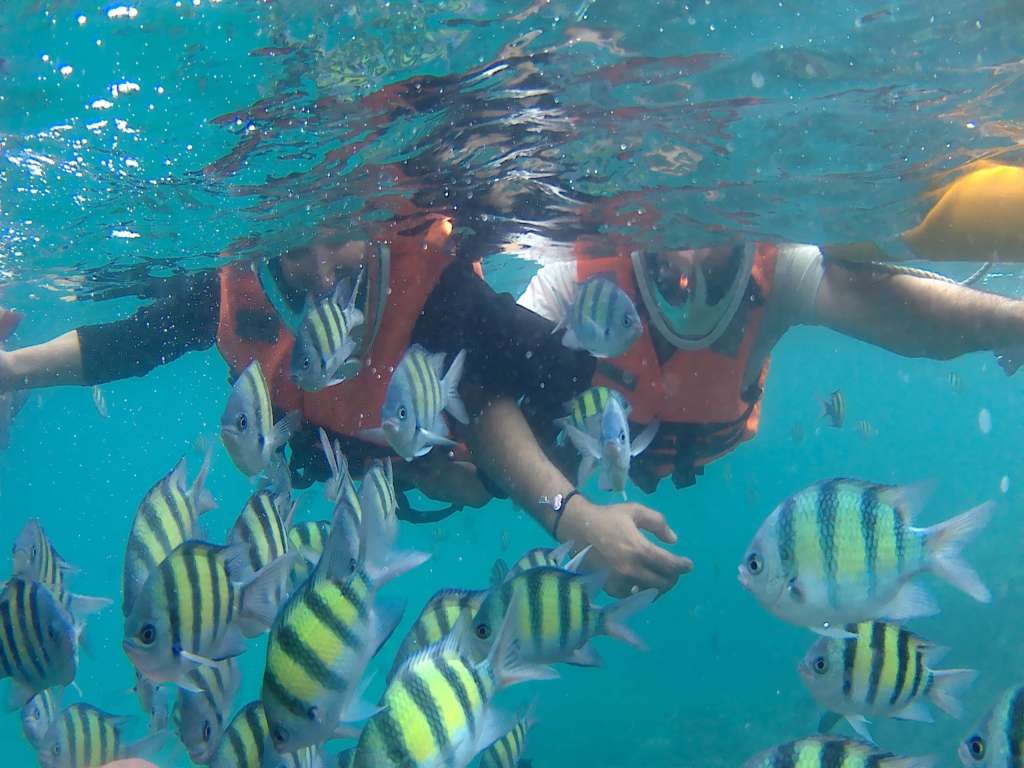
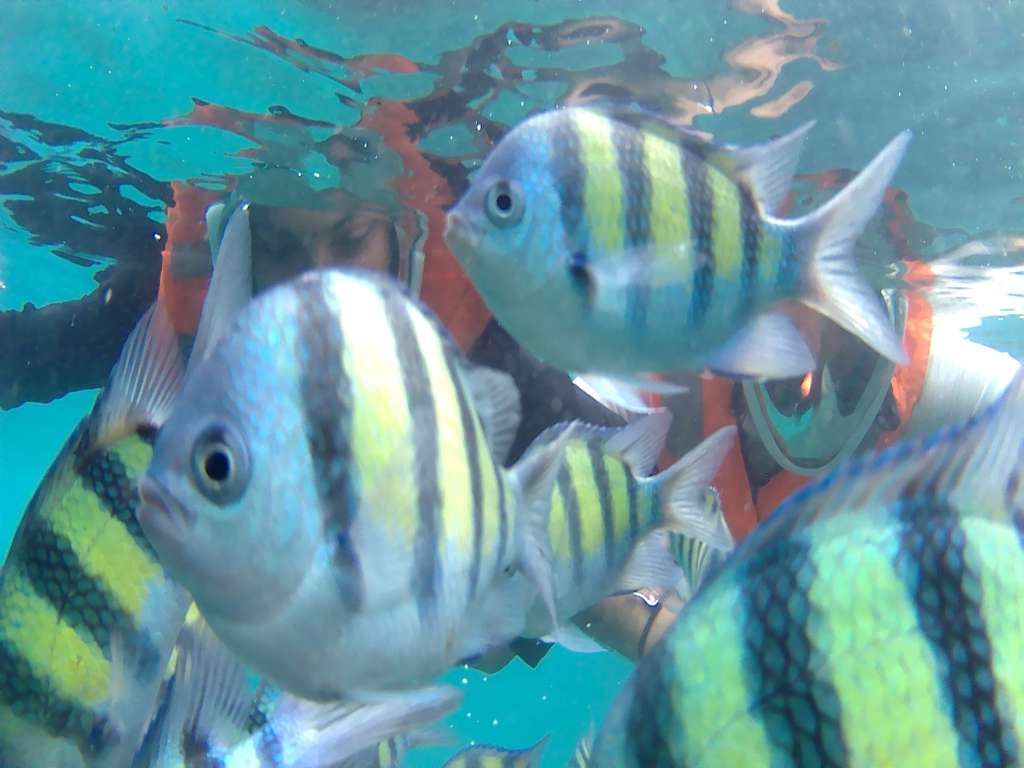
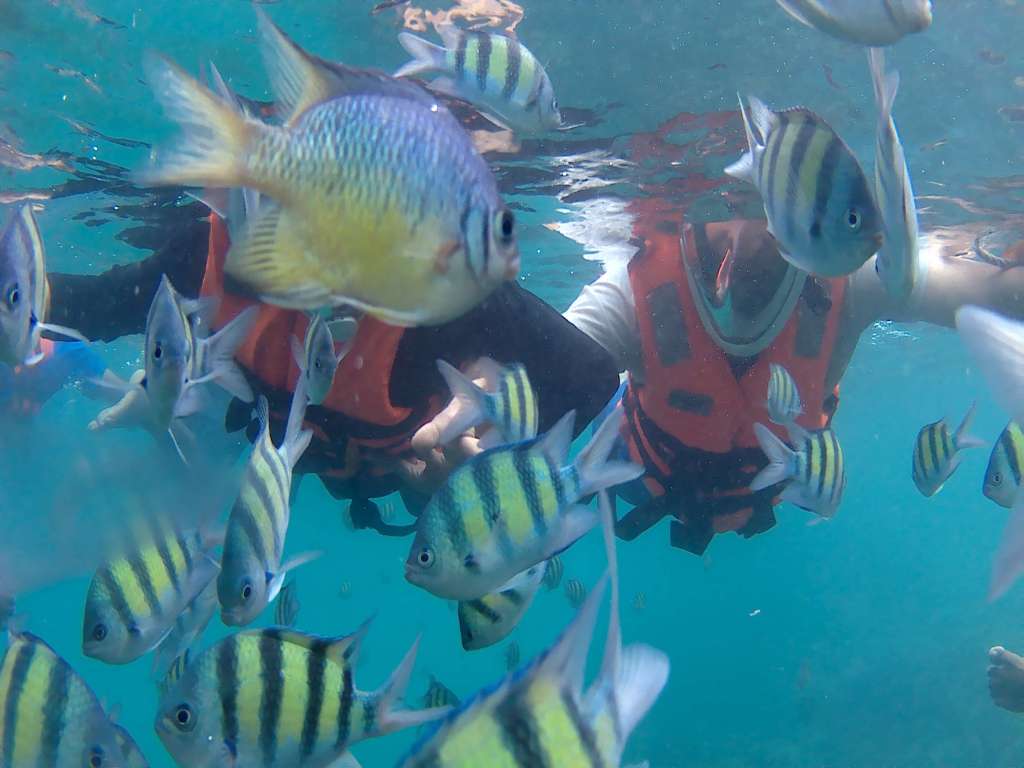
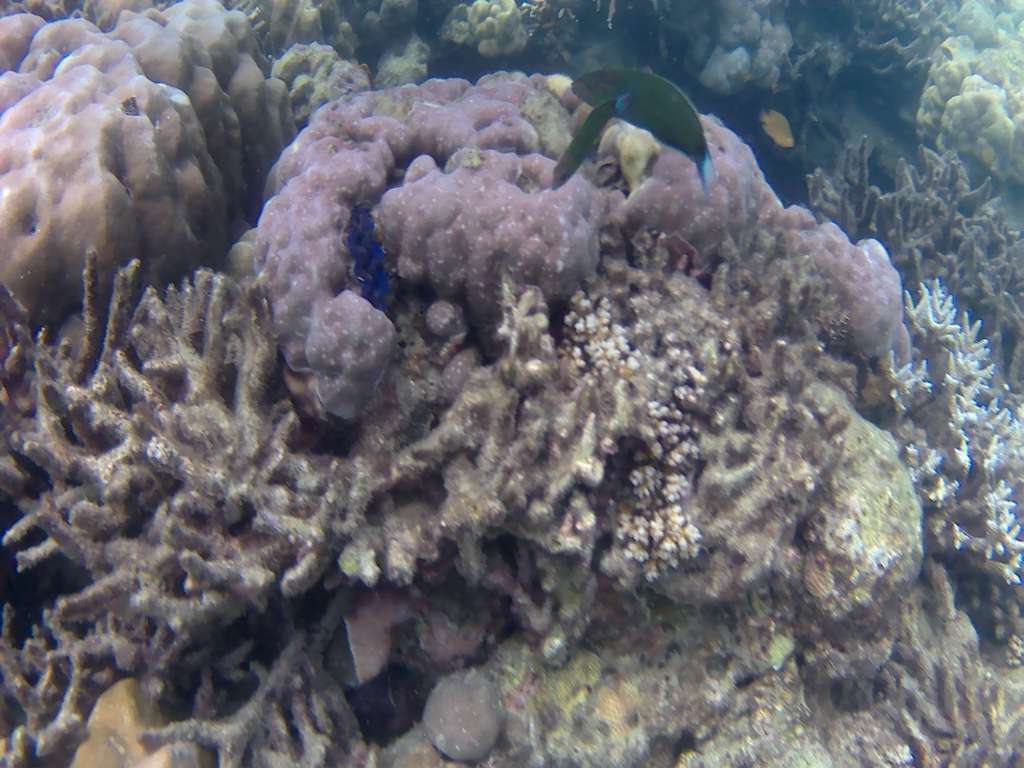
    Our first activity at Elephant Beach was snorkeling. This was my first time, though my wife had done it before. We had a one-on-one guide who helped us. The view of the coral reef, touching it, and swimming with the fish was a great experience.
    Parasailing

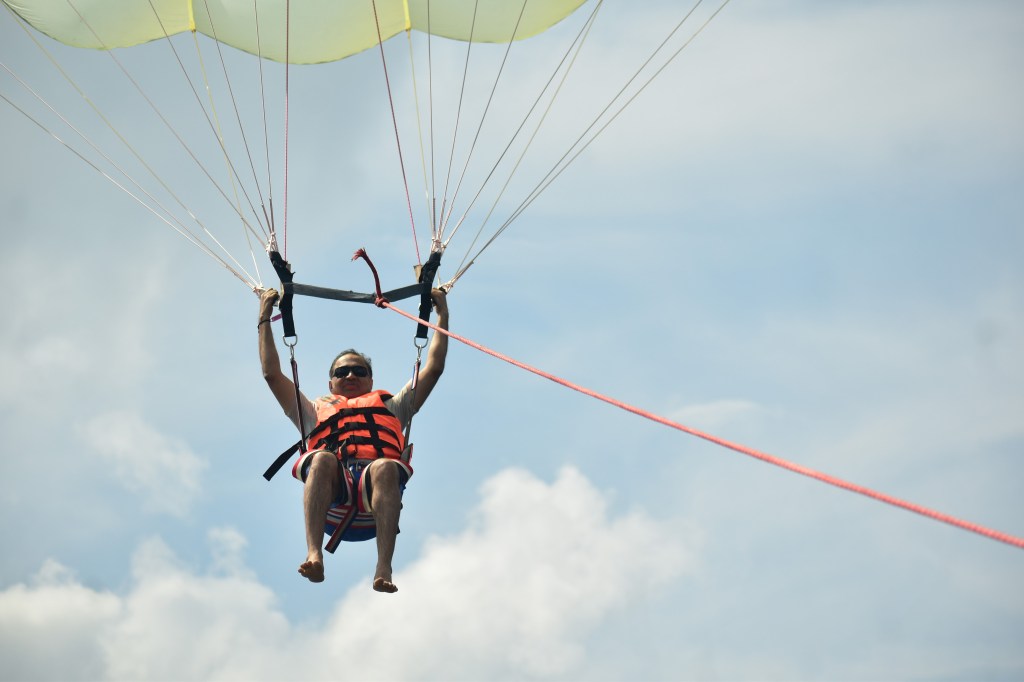
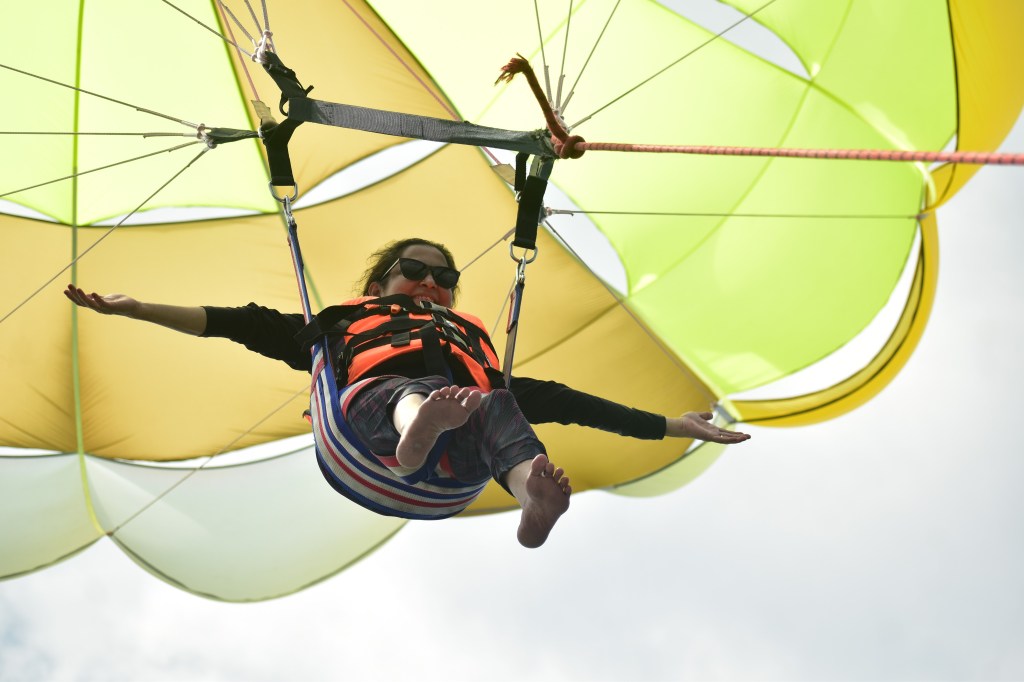
    After snorkeling, it was our turn for parasailing. A group of six of us went out on a speedboat, and we each took a turn. We had both done this before in Goa. It’s a three-minute adventure that is worth every second.
    Sea Walk

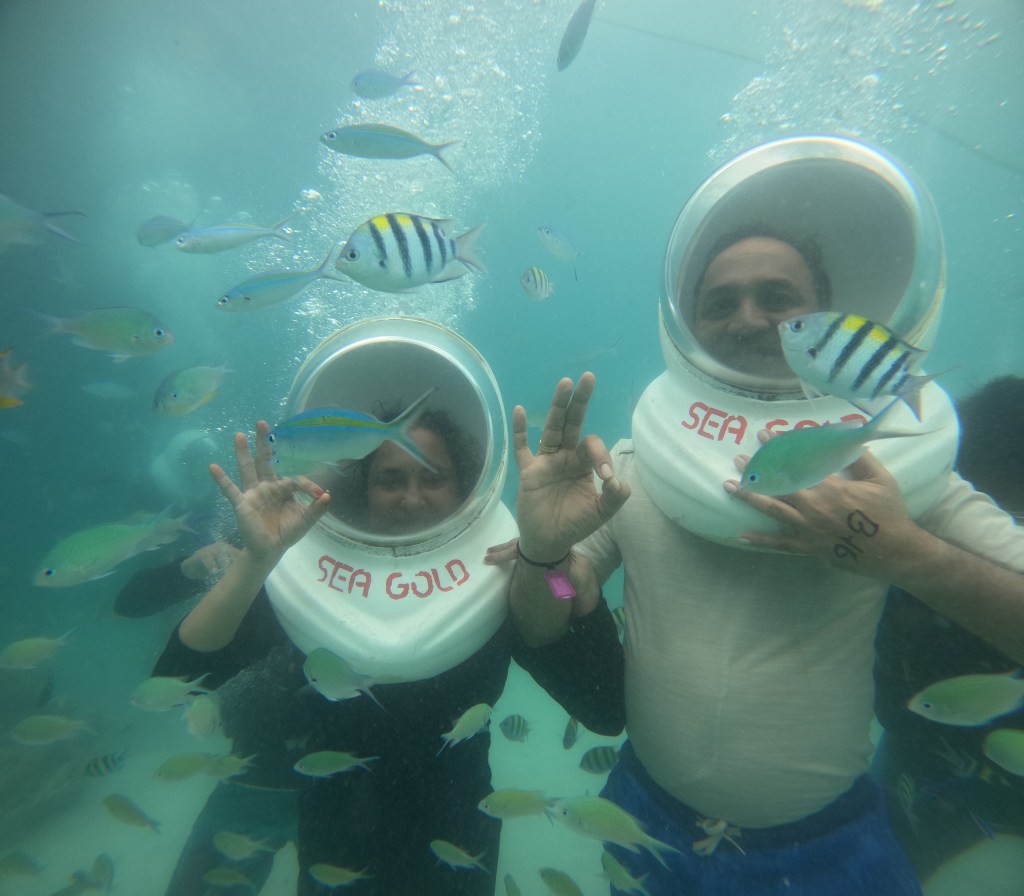
    For me, the highlight was the Sea Walk. I had tried it once in Mauritius and found it thrilling. I realized the process here was much simpler. In Mauritius, we had to wear a heavy helmet and a weight belt; here, it was just the helmet. Also, in Mauritius, there was one diver for every 6 to 8 people, but here it was one-on-one, which made me feel much safer. Going down to the ocean floor (about 6-8 meters deep) and seeing the coral and fish up close is a once-in-a-lifetime experience. The helmet allows you to breathe normally, though your ears might get blocked from the pressure, similar to what happens when a flight descends.
    Conclusion

    Across all the activities, the professional guides also acted as photographers, and we could get the digital photos right there on the island. This was a great added bonus. Given these benefits, I felt the pricing, which seems high at first, was well worth it.

    Based on my experience, the water activities in Andaman were safer and more comfortable than those I’ve tried in Goa and Mauritius. I would recommend Andaman as a top choice for both casual travelers and adventure seekers.
  • In my 3 part blog on Hampi, I have covered the places of historic and religious significance with photographs.  Here, I am giving my itinerary and my feedback on various places and restaurants I visited.  I have given link to my blogs, google location of the places and my ratings of these establishments for one to have an easy access.
    Day 1

    Day 2

    • We had our breakfast at the resort 
    • Left for the Anjanadhri hills leg of the tour
    • Reached the resort for lunch 
    • We spent the afternoon and evening leisurely.  I booked a massage at the resort.  I would rate the massage 3 stars out of 5
    • Evening we continued at the resort and had our dinner at the resort itself

    Day 3

    • Breakfast at the resort 
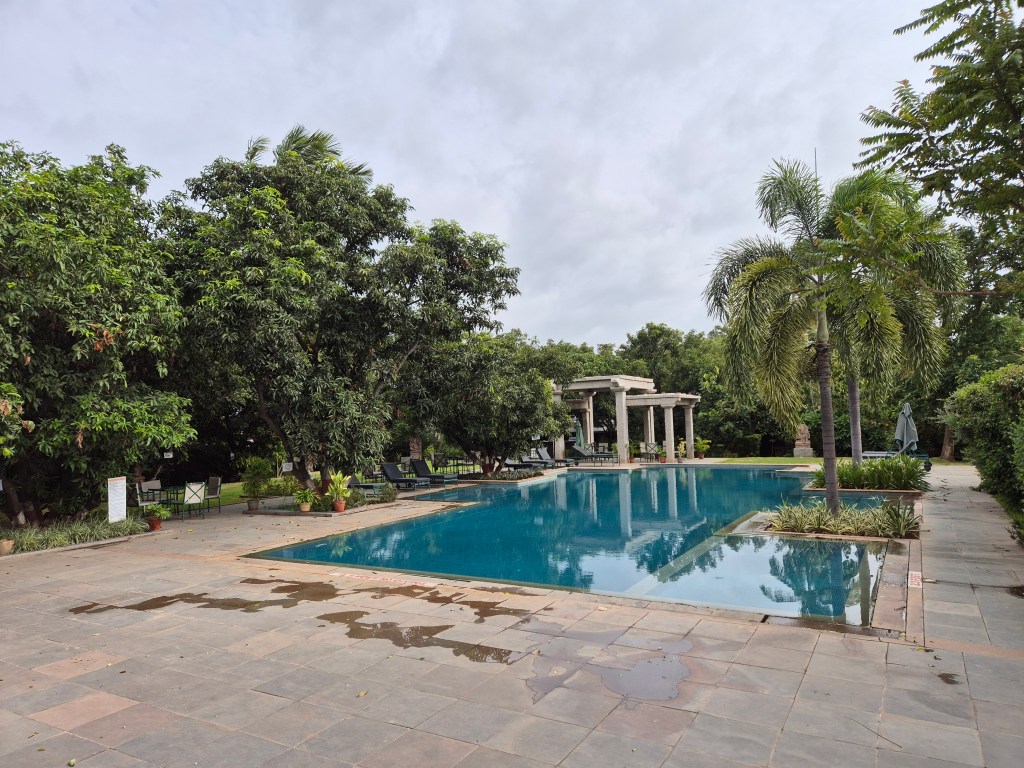
    • Spent some time in the swimming pool
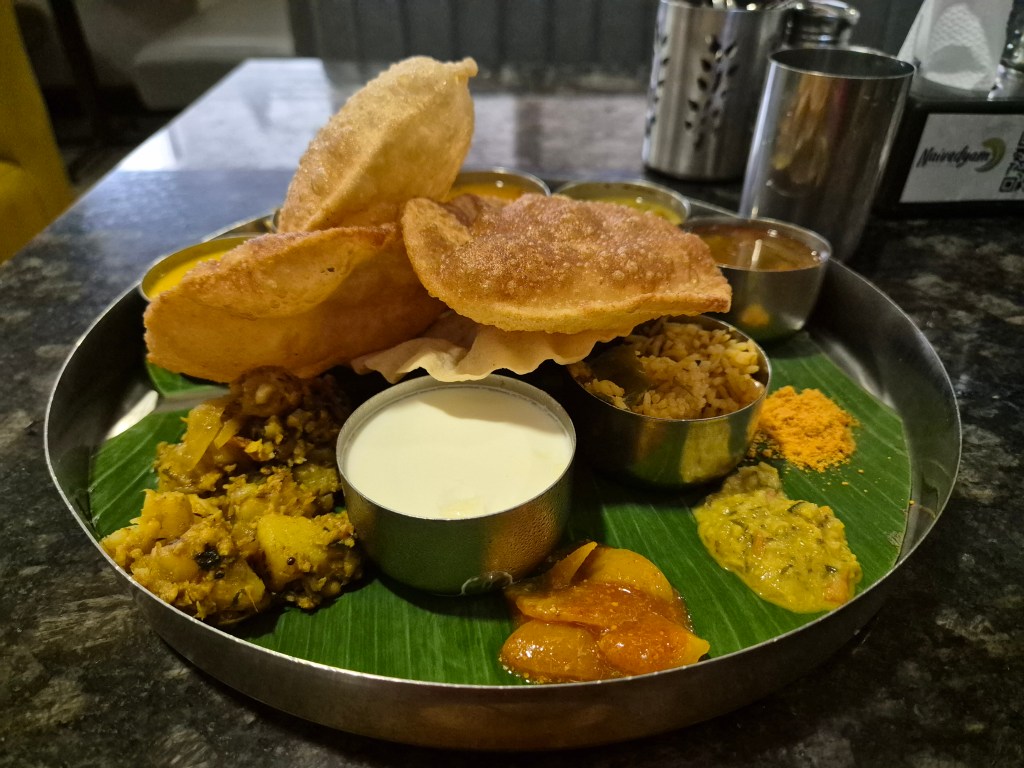
    • Left for Lunch at the Naivedyam Restaurant.  The option was between Kailash Parbath and Naivedhyam.  I rated the restaurant 4 on Google
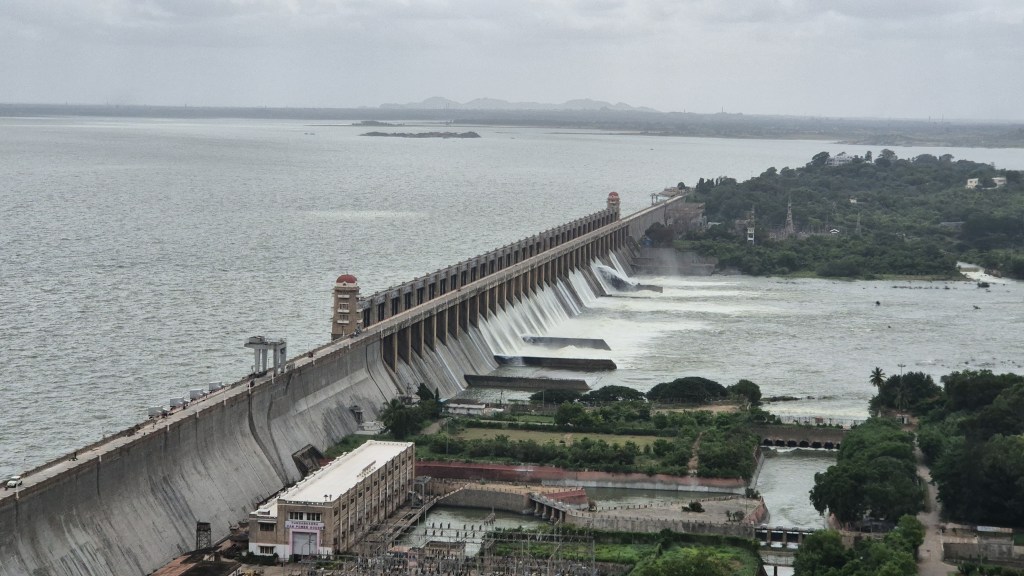
    • Visited the Tungabadhra Dam, went around Hosapet
    • Reached the Resort.  The resort was kind enough to extend my stay with a charge till late evening. 
    • Checked out around 9 pm and went to Naivedyam for dinner. From there went to the Station
    • My train to Chennai was only at 11:55 PM which was around 15 minutes late.  I reached the station around 10:30 PM and decided to use the AC waiting room. If there was one not so good experience in the whole trip, it was this. I rated the facility 2 out of 5 on Google   

    Overall, I would rate the trip as outstanding. I would also recommend that visiting Hampi should be in your bucket list.

    Will cover other interest places which I visited recently in the next blog. Bye till then.

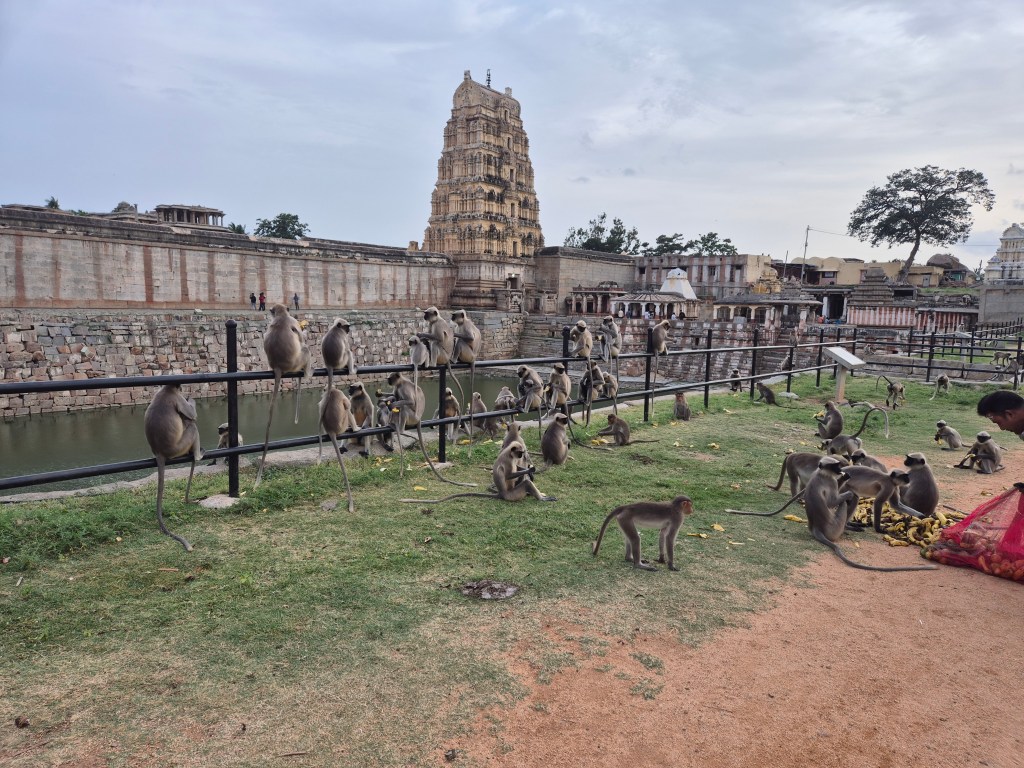
  • We ended the previous evening with the locals feeding monkeys.  The next morning was all about Hanuman, our favourite monkey god and experiencing a small part of the Kishkidha Kandam in the epic Ramayana.

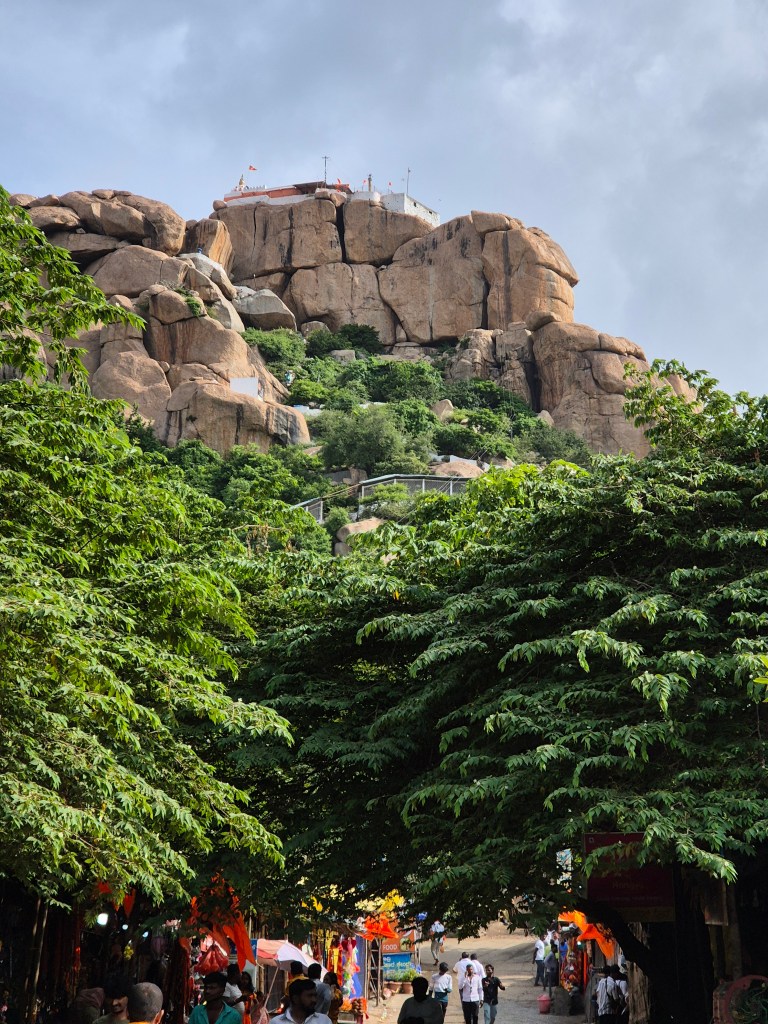
    Close to Hampi, across the river Tungabadra is Kishkinda, the monkey kingdom referred to in the Ramayana.. Anjanadhri Hills is considered the birth place of Hanuman.  The name comes from Anjana Devi who is Hanuman’s mother. I set out my day’s plan with the visit to the Anjanadhri hills. 

    While this leg of the Hampi tour does not require a guide, guidance from the resort and my driver were useful in charting out our journey.

    A 40 odd minute drive from the resort, we reached the foothills of the Anjanadhri Hills. 

    The day was cloudy, but it was not raining.  So I decided to start my ascend to the temple atop the hill.  It was definitely not an easy climb. There were around 600 steps with some of them being steep.  I had to take a couple of halts on the way.  Of course, each stop was a great photo op. It took me around 40-45 minutes to reach the temple.

    All through the steps, you come across a lot of monkeys, of course, you should expect it to be so given the vanara sena that Rama garnered was from here. Make sure to carry a bottle of water if you are climbing this hill.  I did not come across any stalls either on the steps or on top of the hill.  Of course, you also need to be careful enough not to lose the water bottle to the monkeys on the way.

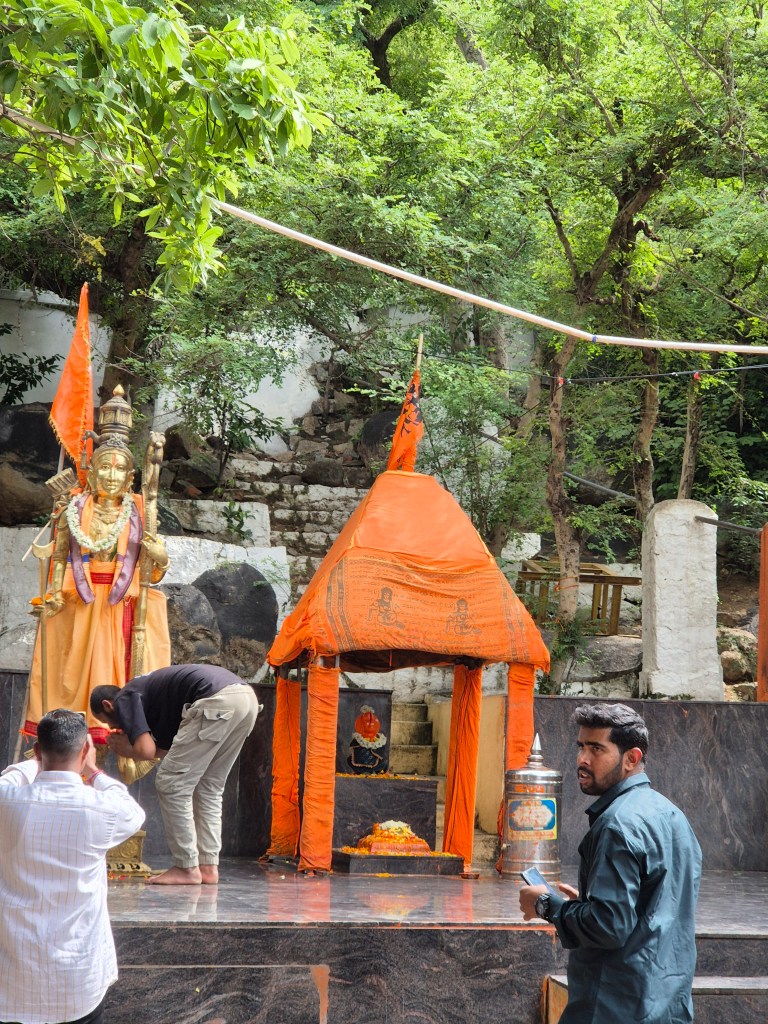
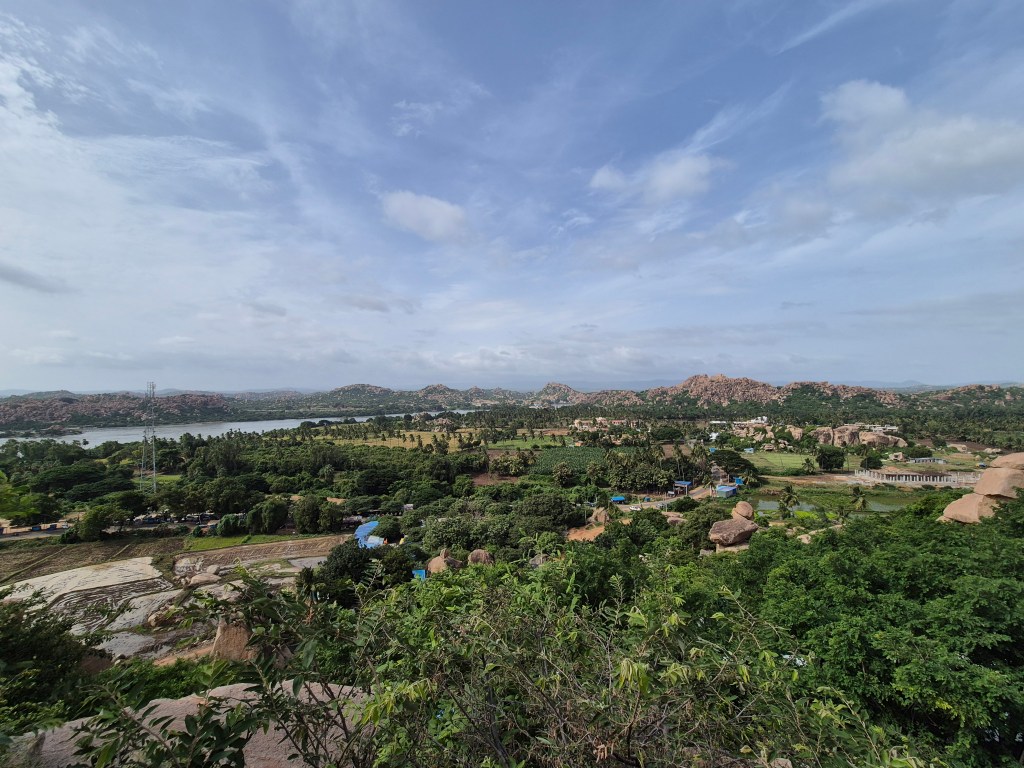
    Hanuman Temple at Anjanadhri Hills and scenic view around

    Hanuman is in the form of a rock carved statue.  Priests were performing pooja in the temple.  There is a shrine for Sita, Rama and Lakshmana along with Hanuman.  A separate shrine inside the temple of Anjana (mother of Hanuman) was special. 

    After spending around 45 minutes at the temple I descended the hill taking in not just fresh air, but also a breathtaking aerial view of Hampi and enjoying the flow of River Tungabadhra. 

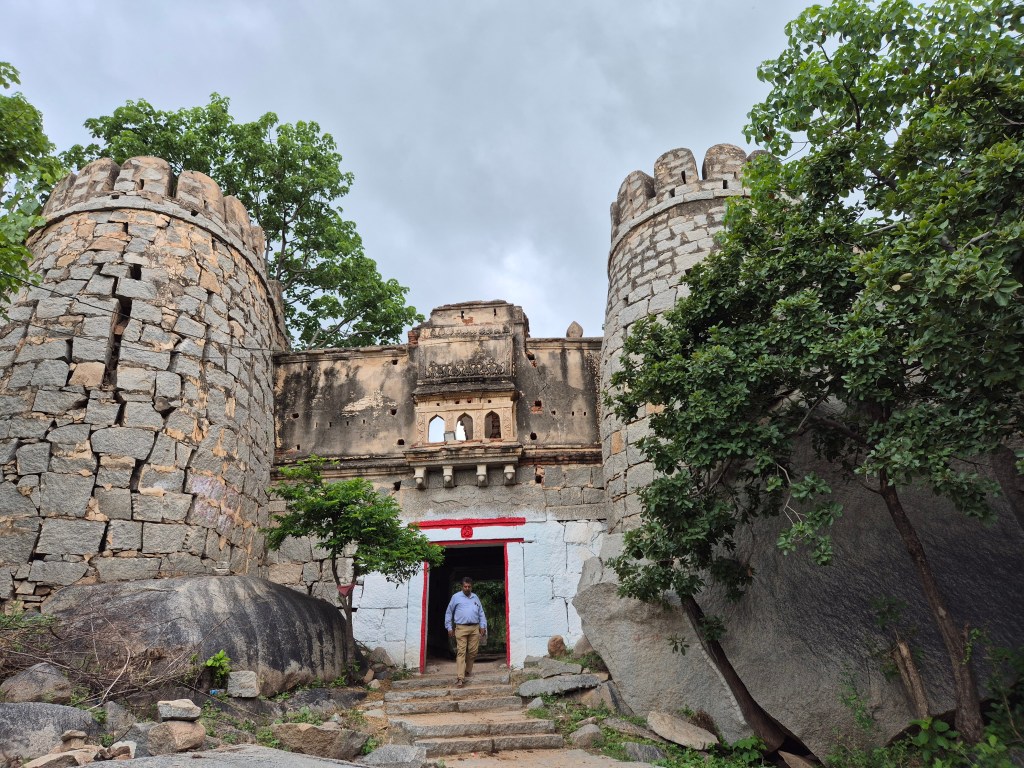
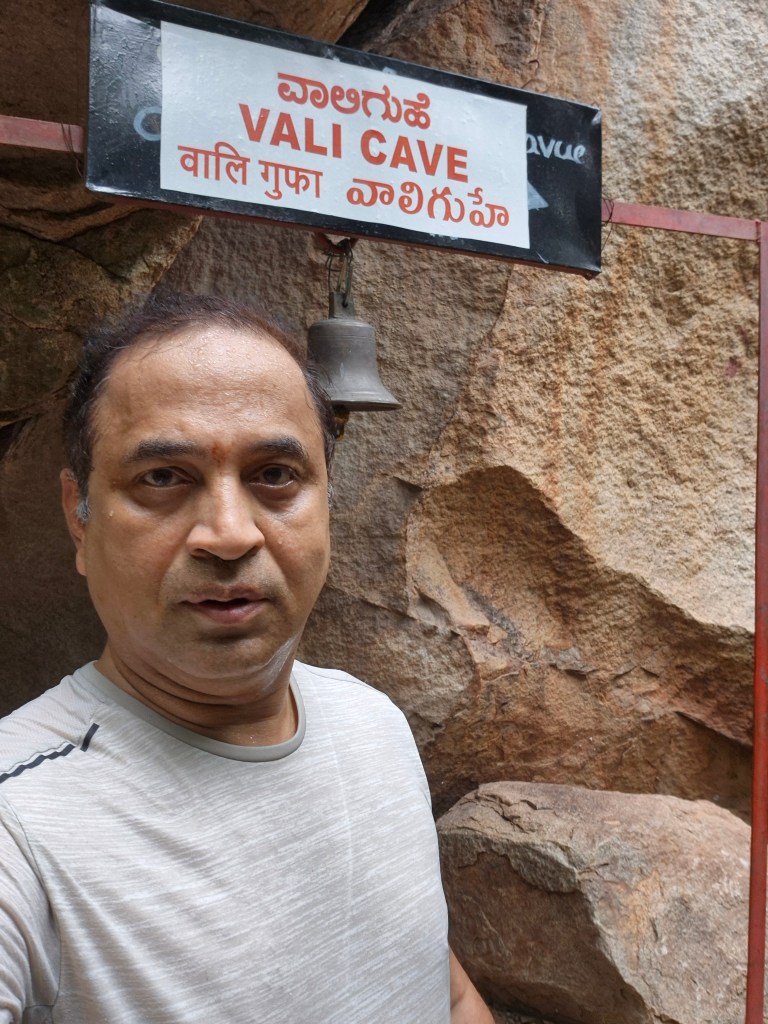
    Our next stop was the caves of Vali and Sugreeva.  I could only cover Vali cave and it started pouring.  So I had to return to the car.  

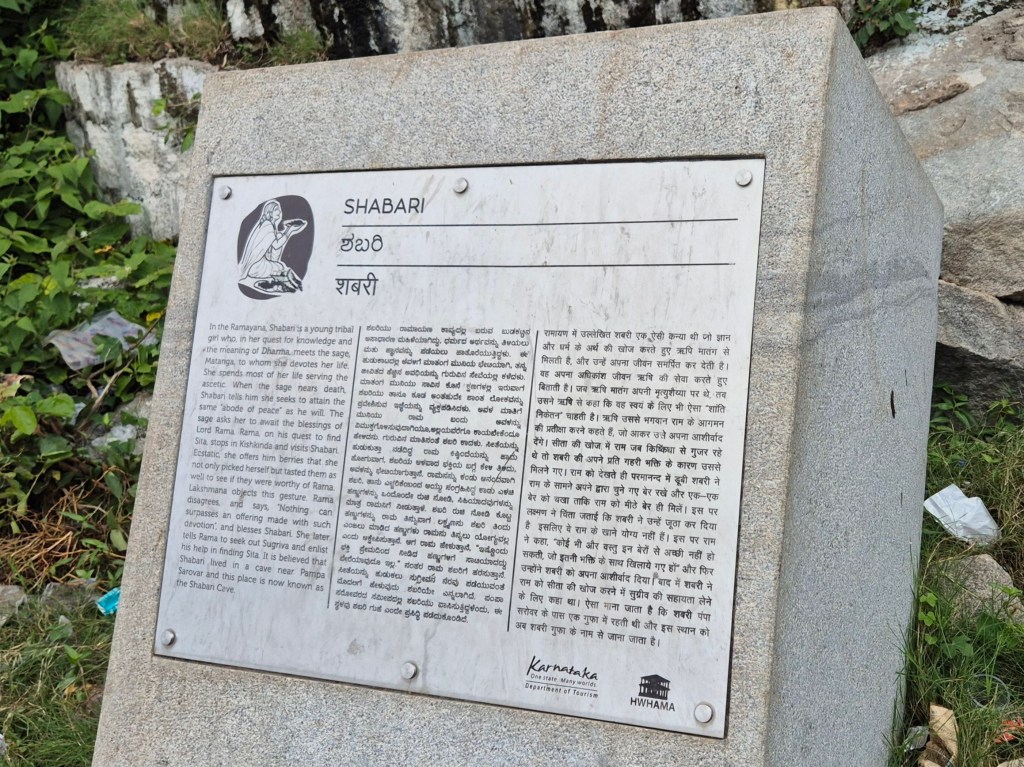
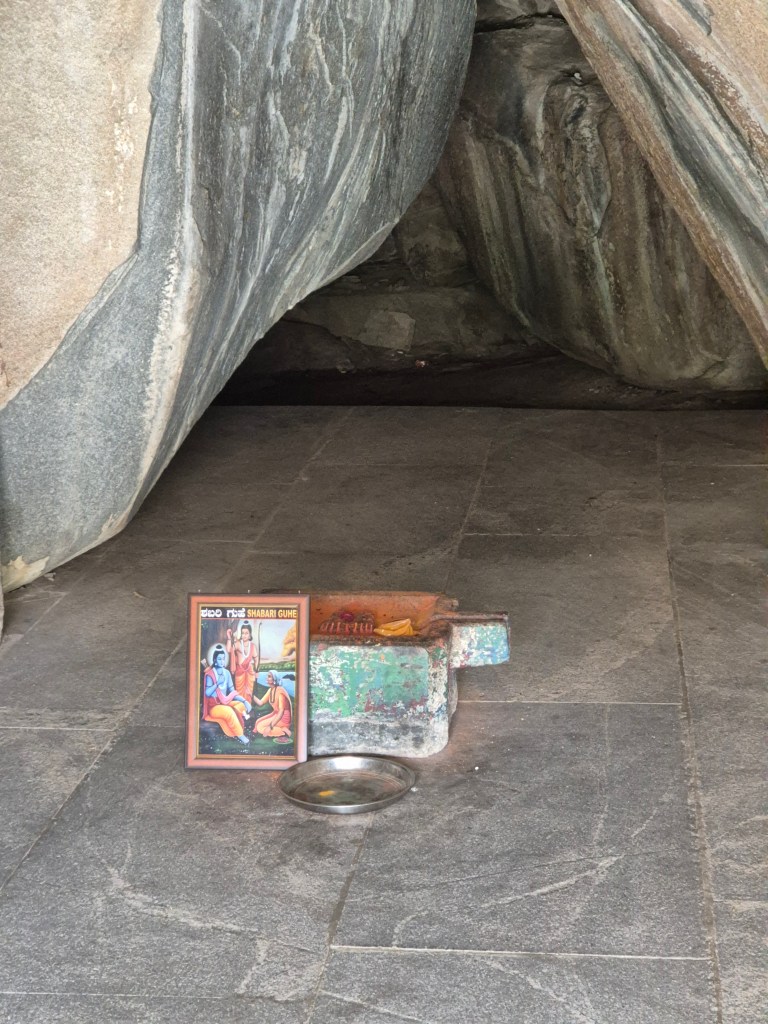
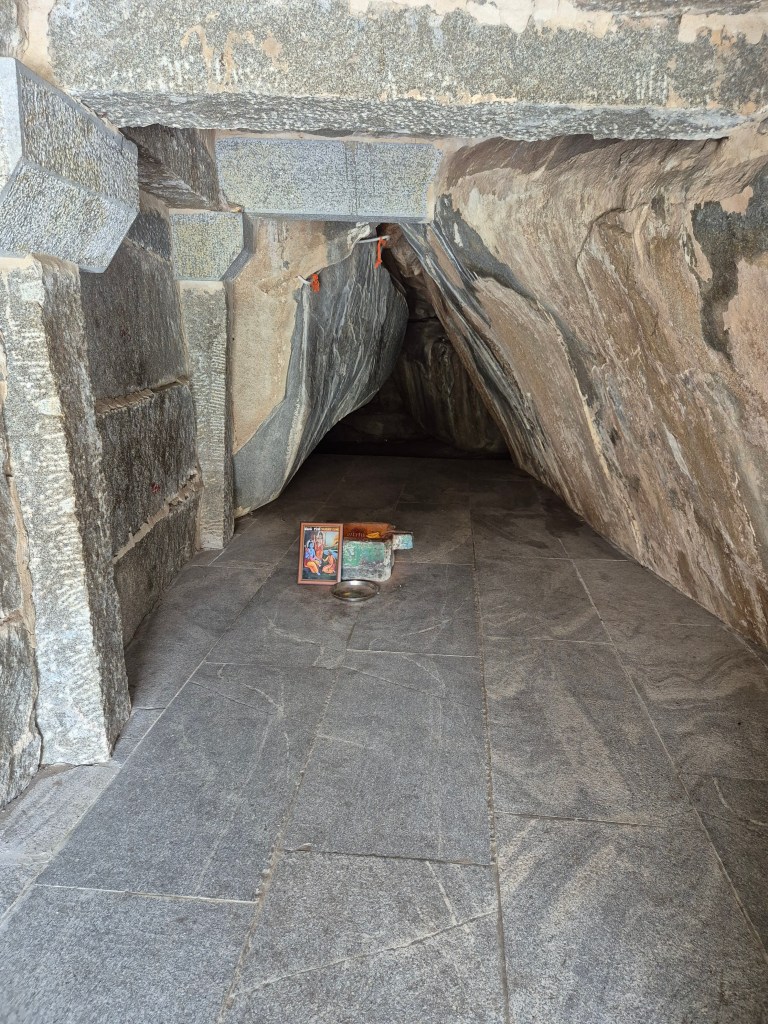
    Another short drive from there, we reached the Shabari’s ashram.   When Rama came in search of Sita, he reached Shabari who offered Rama fruits (after she had a bite to see if they were good enough for Rama).  It is also believed that Shabari informed Rama about Hanuman and Sugriva and suggested that he take the monkey warriors’ help in search of Sita.  

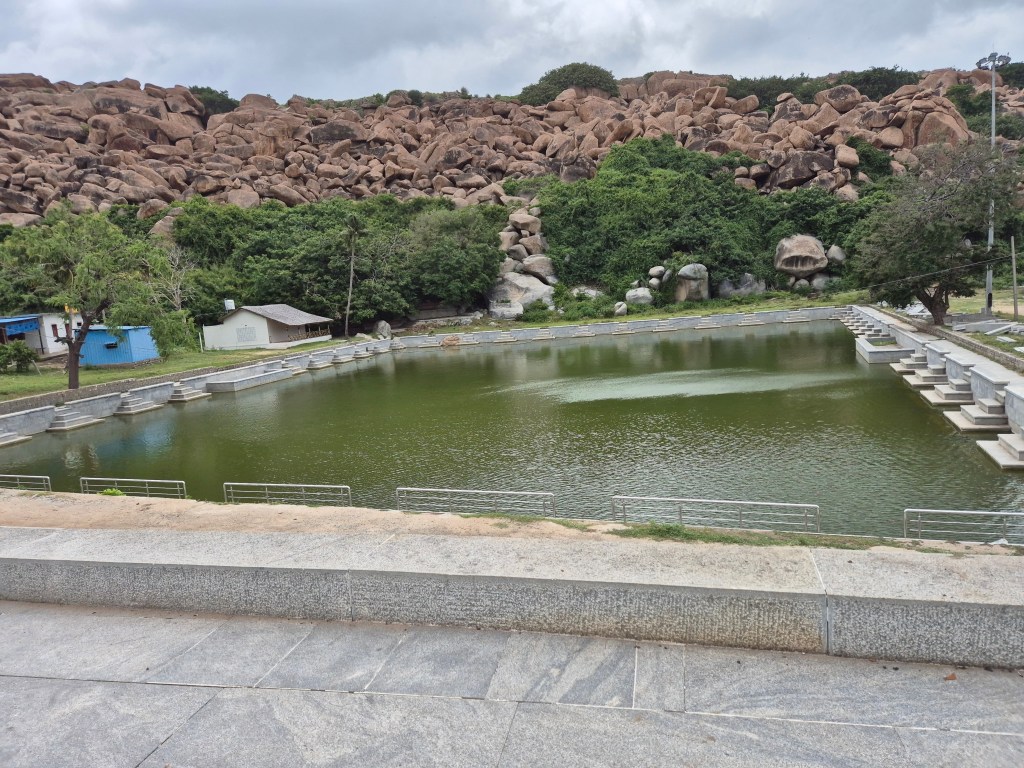
    Just across Shabari’s cave is the pampa sarovar, a sacred lake which is associated with Parvati doing penance and where Rama took a holy dip. There is a nice Siva temple near the pampa sarovar. 

    The morning reminded me of various ramayana kathas I had heard since childhood, specifically the Sundara Kandam in Kamba Ramayanam. The role of Shabari, Hanuman, Sugriva and the army of monkeys flashed through my mind during the visit. 

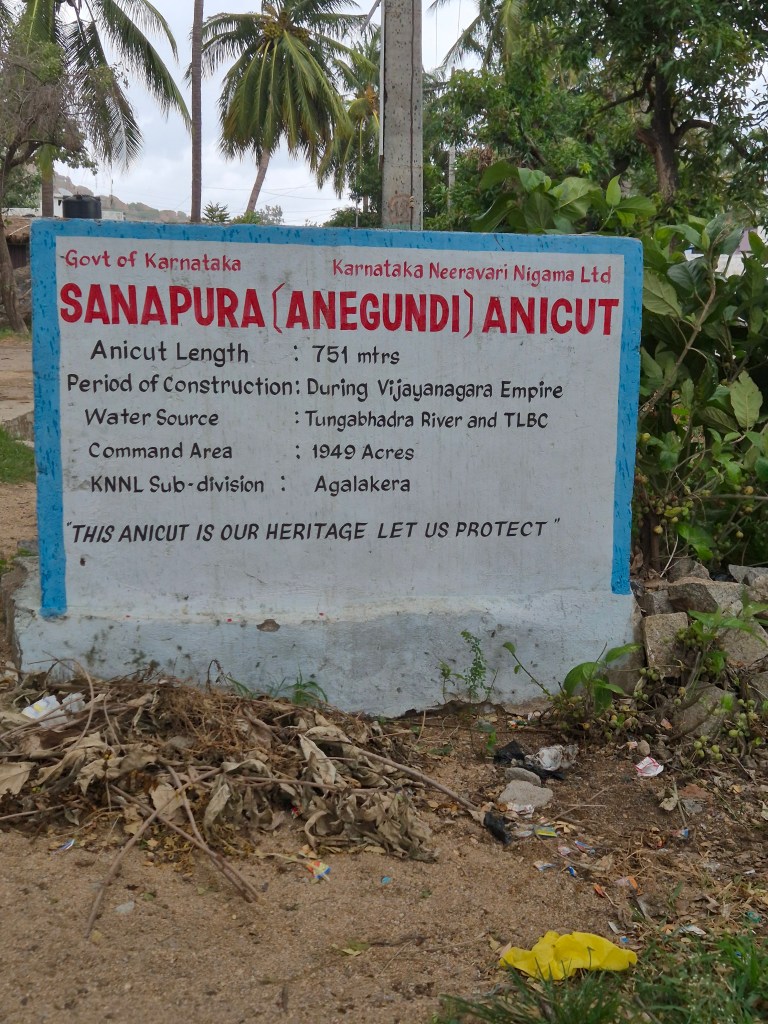
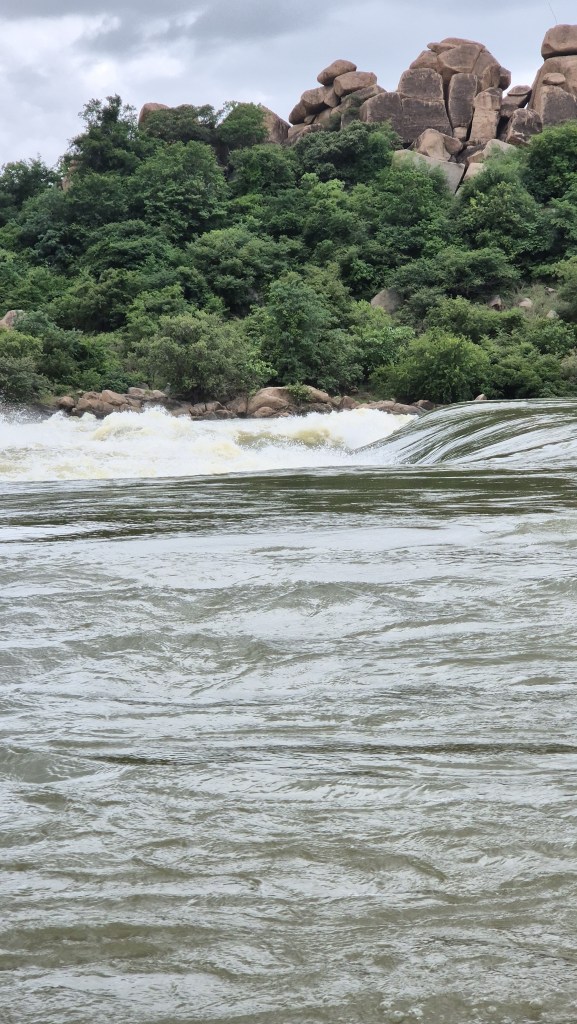
    After a blissful day of experiencing Ramayana, we went to the Anicut across the Tungabadhra river, only to see that the water levels were higher than the anicut.  It was drizzling a bit when we reached there.  We spent some calm and soothing time in nature and drove back to the resort for lunch.

    I have covered tourist and religious locations in Hampi over 3 blogs primarily with photos. Will add another blog on the travel plan and the food.

  • Hampi

    Hampi has been in my bucket list for a long time. Finally I made it to Hampi with my wife in early July, 2025. I had many concerns, weather being the most important one. However, to my surprise had a great 3 day visit to Hampi. The weather was excellent. A bit of rain, summer heat had given way to a pleasant weather. Thungabadra river was running in heavy streams. A perfect time to explore the grandeur of the Vijayanagar empire.

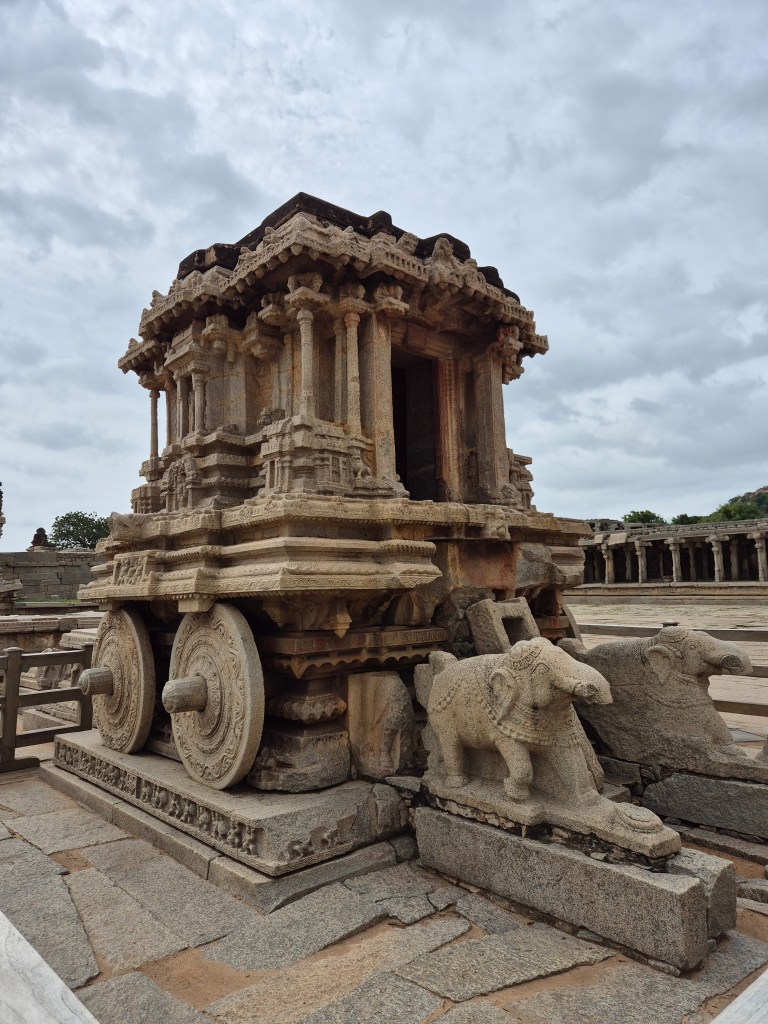
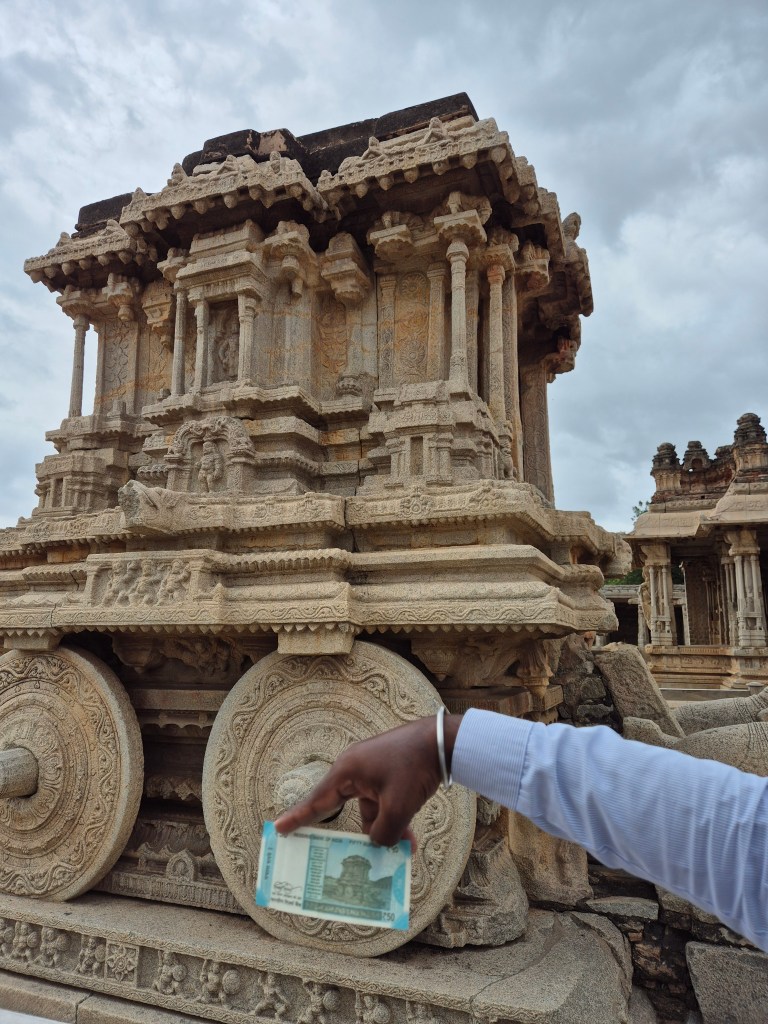
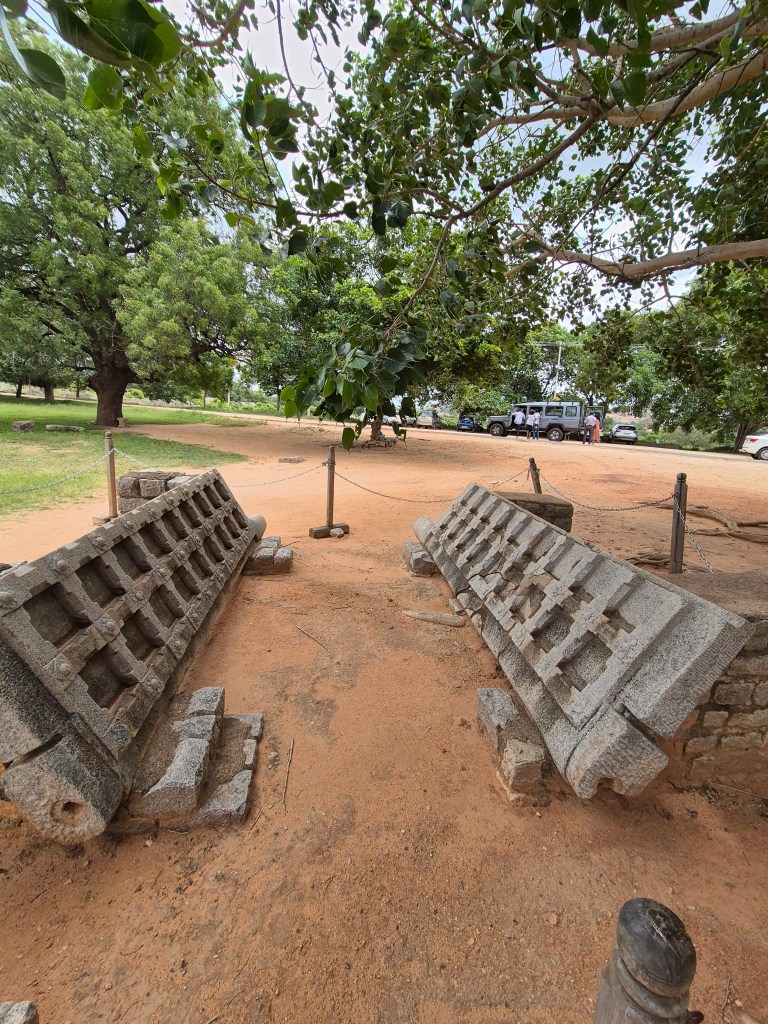
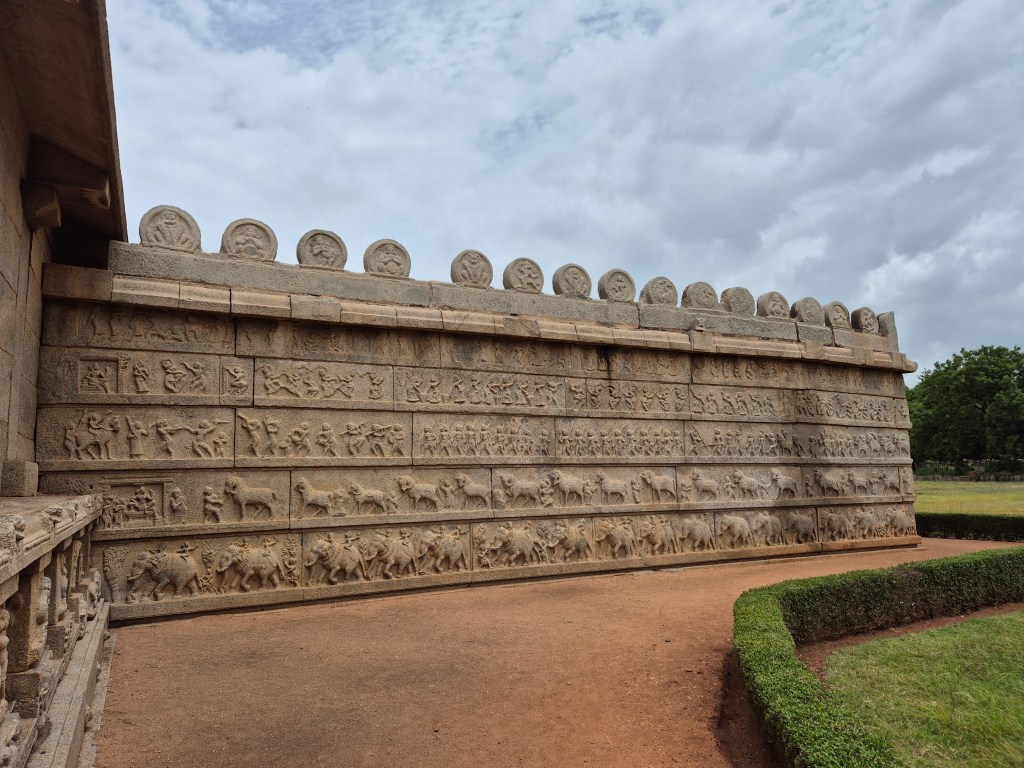
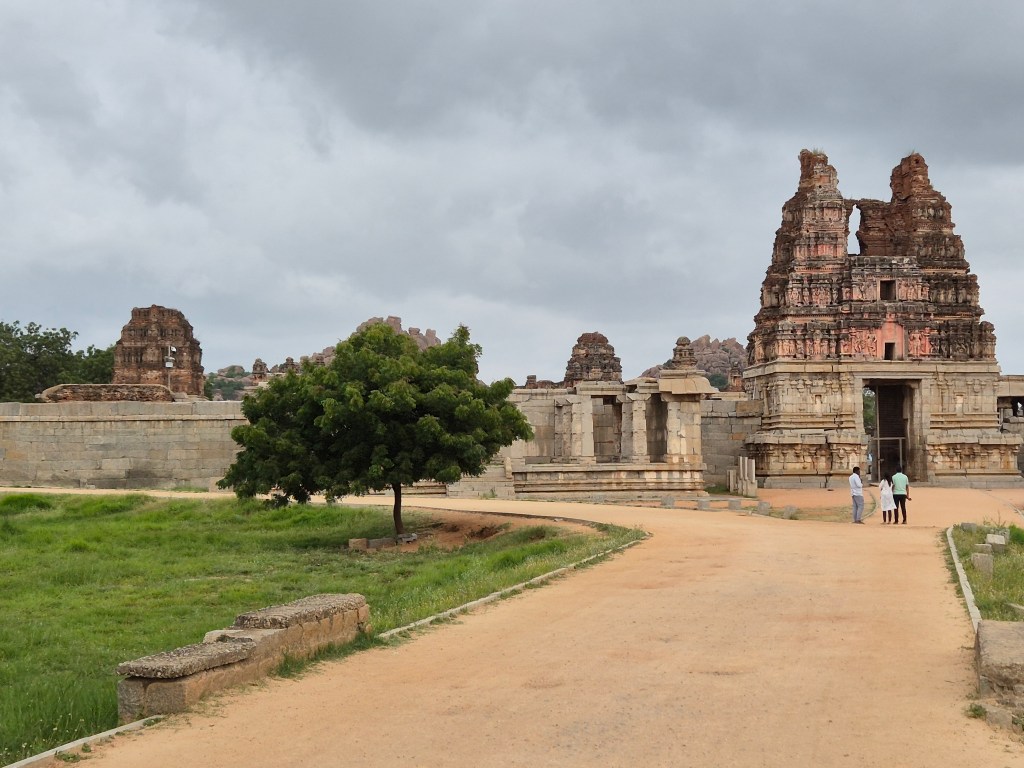
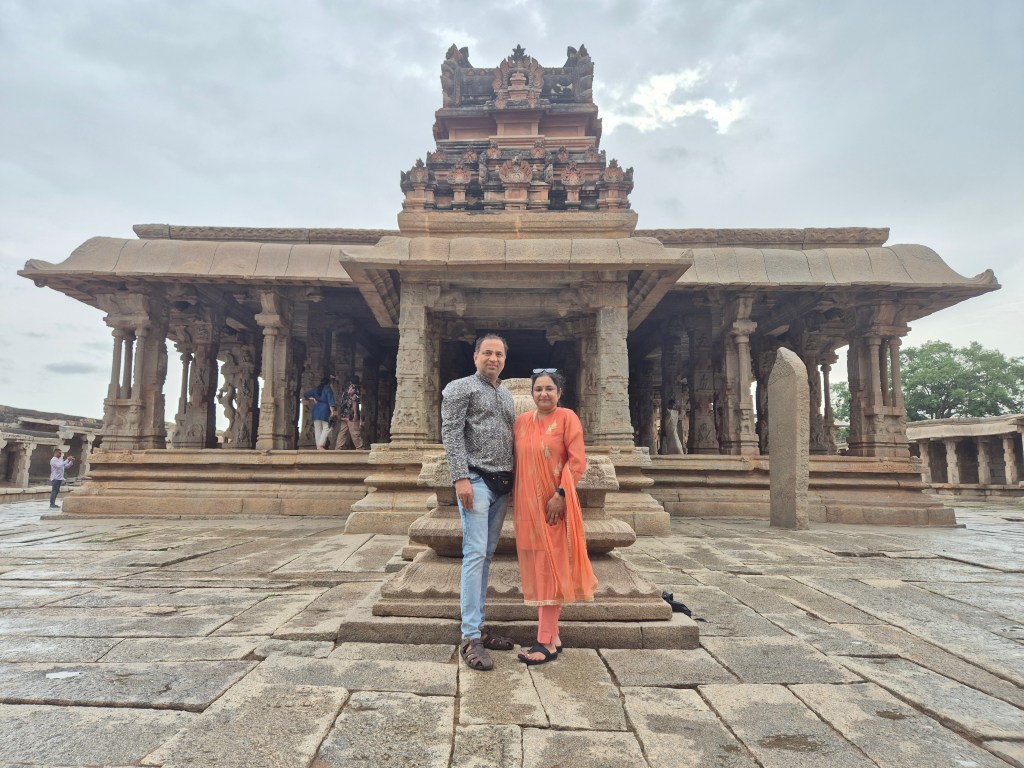
    On the first morning we went to the Vittala temple ruins. The architecture is so intricate and interesting that even in ruins you can see how it would have stood in its heydays. The most popular one is the chariot which is on the 50 rupee note.. As they say, a picture speaks thousand words. Hence, I have decided to share a few pictures instead of a commentary.

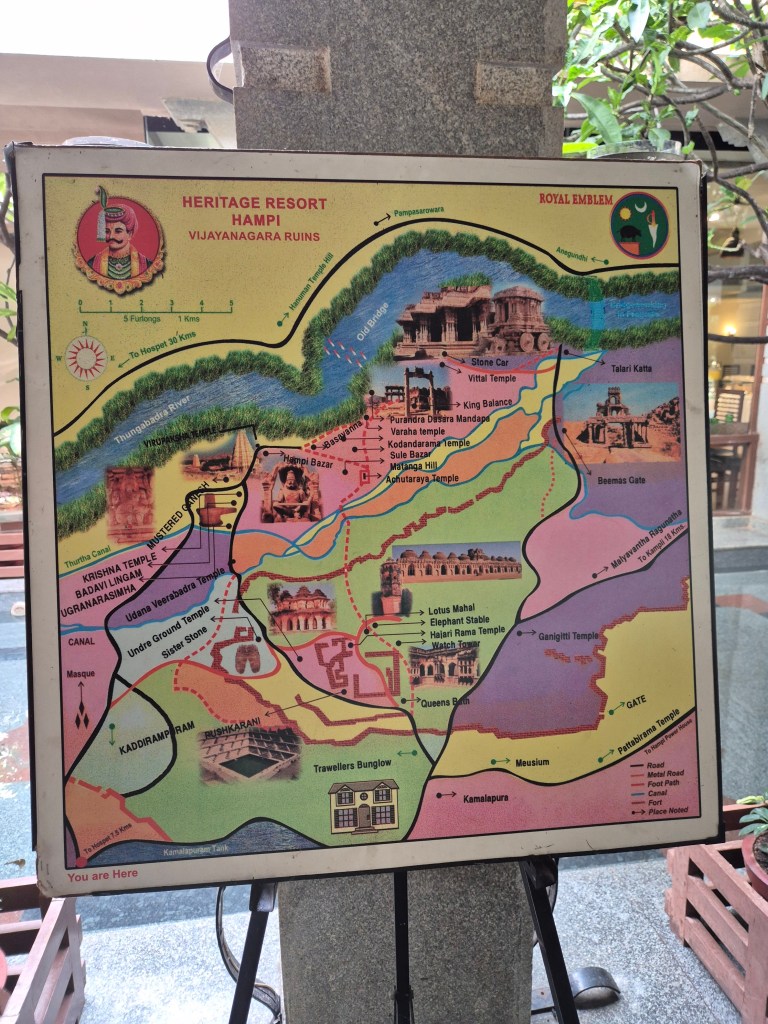
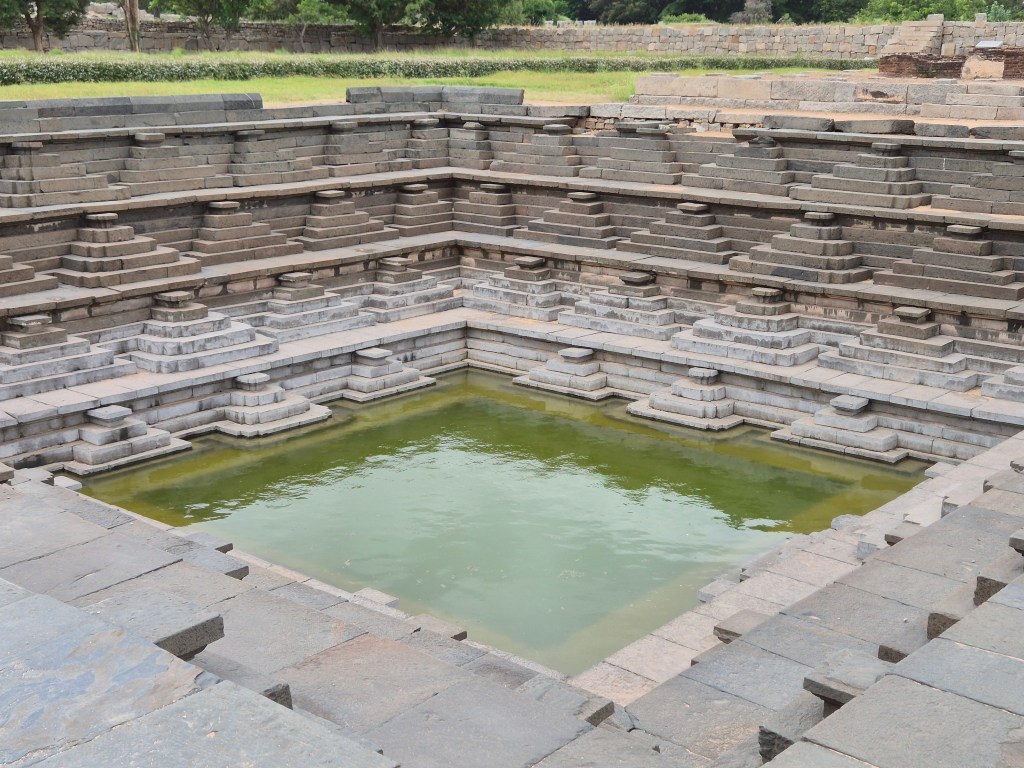
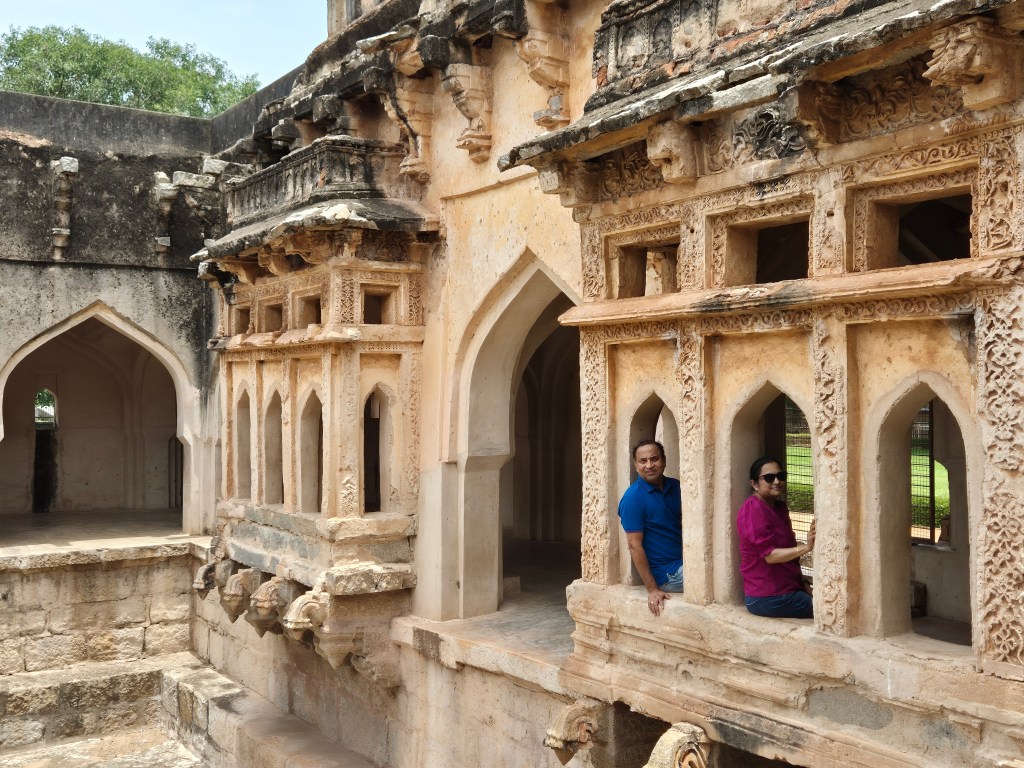
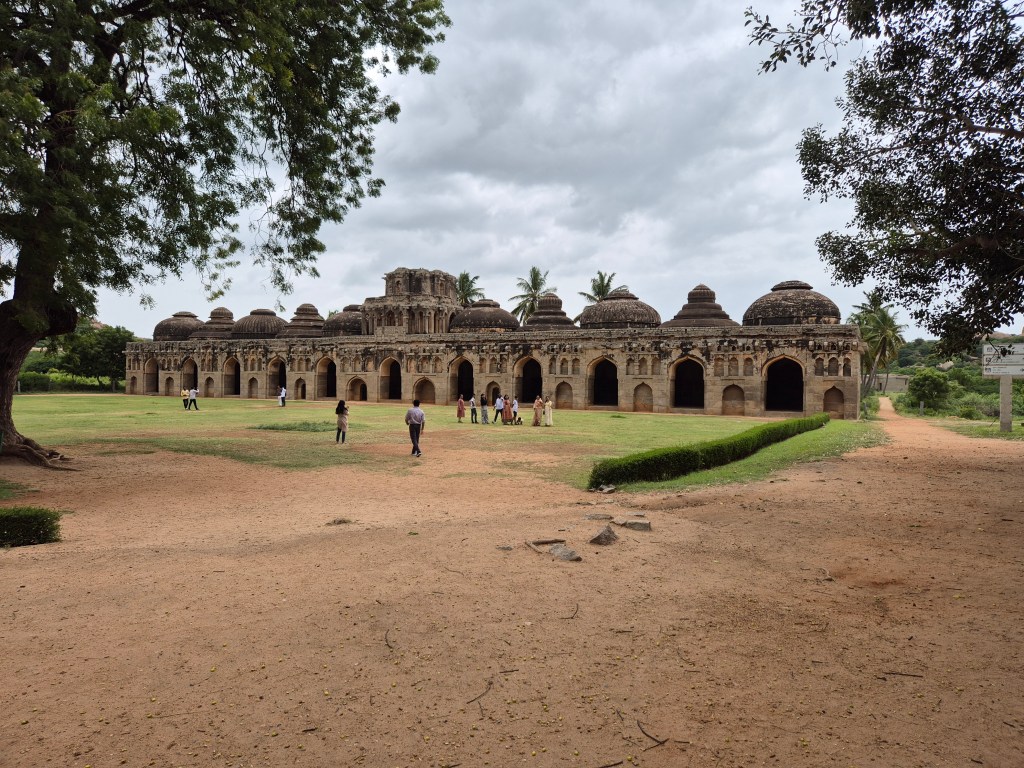
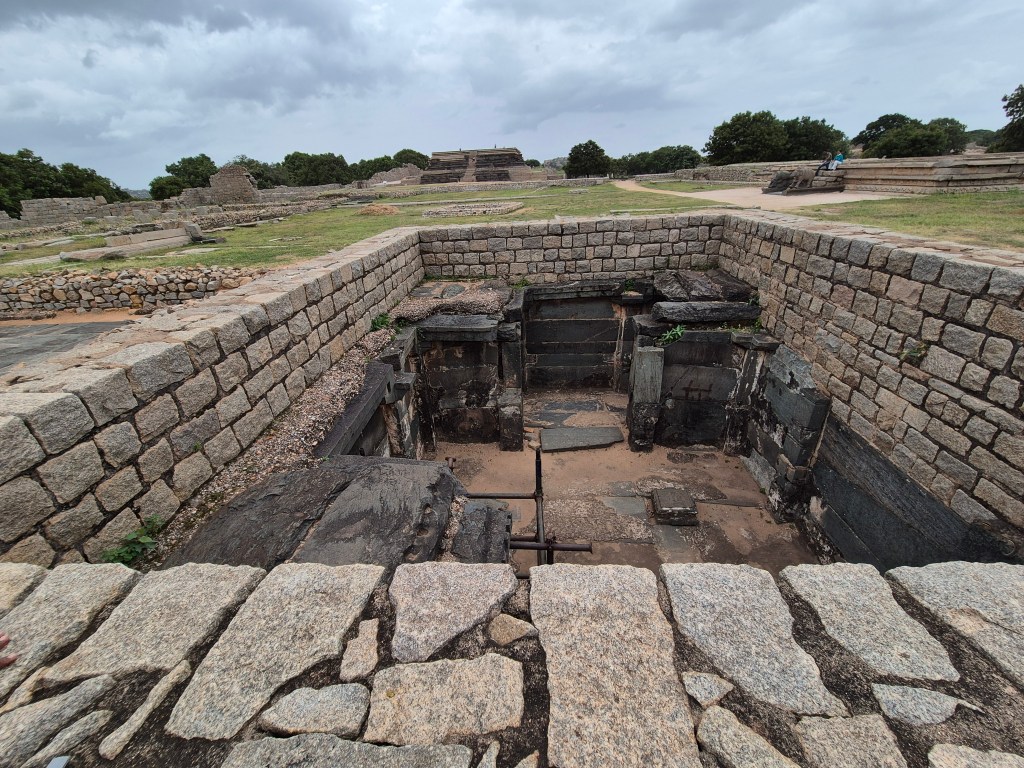
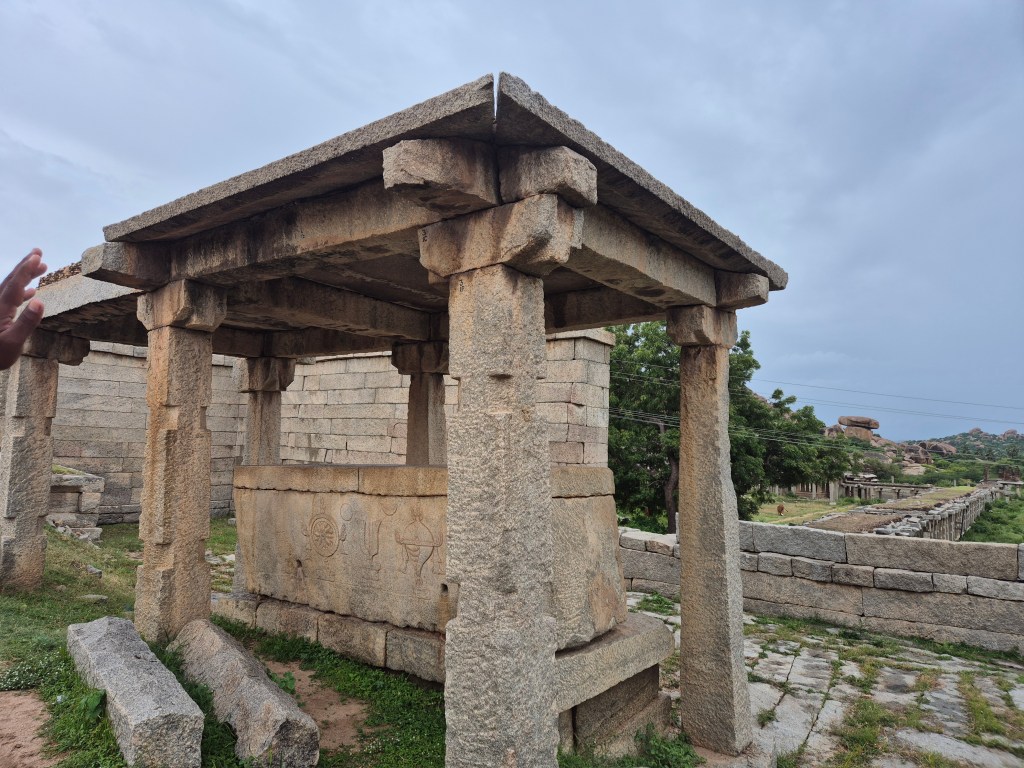
    Next was the visit to the royal areas, which included a majestic courtroom, palaces, water pipelines, queens bath, elephant staple, lotus mahal, ministers pedestal and few temples. I am not going to write about each of these. It is unfortunate that almost every construction has been destroyed. What remains itself is sufficient for one to understand how successful the kingdom was.

    The vastness of each of the areas is something that hits you. Individual staple for each elephant, the process of feeding, quarters for the mahouts are there to see. The remains of the queens places, shows how elaborate each palace was.

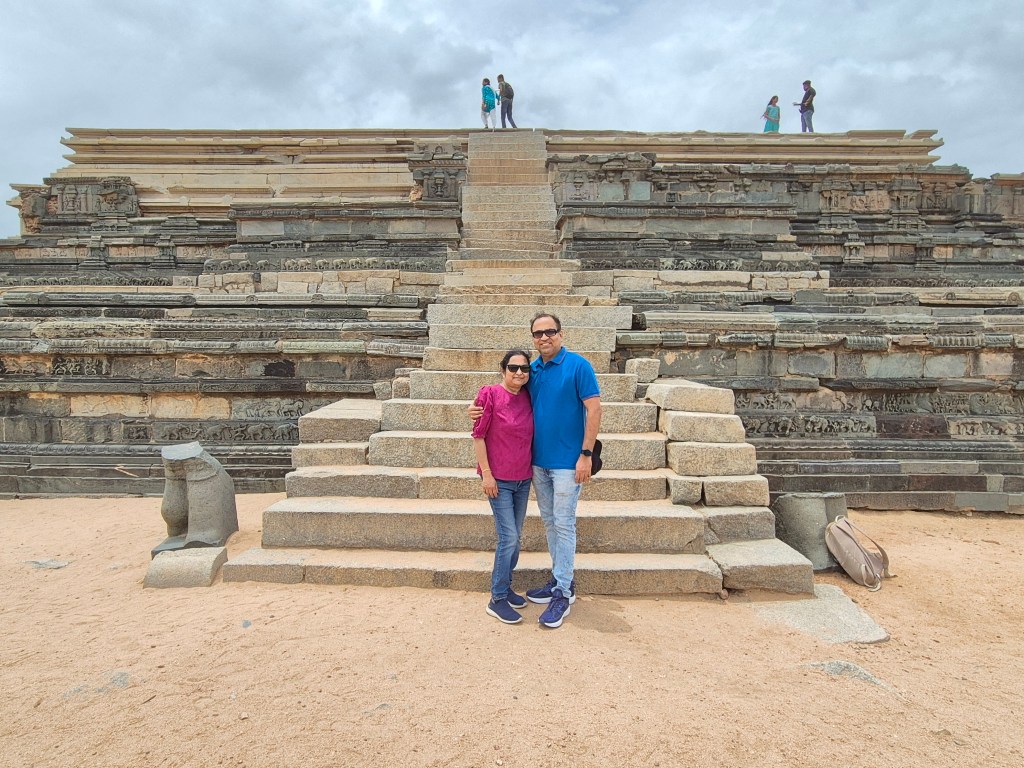
    For me, the highlight was the Kings Court. The platform is so high that the king can see a very large area, just by looking around. The rock doors, which can only be operated by the elephants adds an interesting aspect to the security of the place. Further, the underground safe house is something that shows the extent of security with comfort the kingdom had for its rulers and family.

    The ruins take half a day to go around. Yes, it requires one to walk around a bit. But it is worth every step. If you are visiting, make sure to have a good guide. You will not be able to do justice to your visit without a proper tour guide. If you were impressed by the sets of movies like Bahubali, wait till you see Hampi as I am sure, the sets must have drawn its inspiration from the early kingdoms in general and Hampi in particular.

    Yes, it is sad to see all these grandeur having been demolished to ruins. That gives a perfect opportunity for one to see both the advancement and grandeur of the past as well as the destruction of the same. It clearly reminds you that the world is made of people who create and those who destroy, and both the sides are there to see in one place at Hampi.

  • It started drizzling a bit in the evening when we left the resort for the Virupaksha temple tour. 

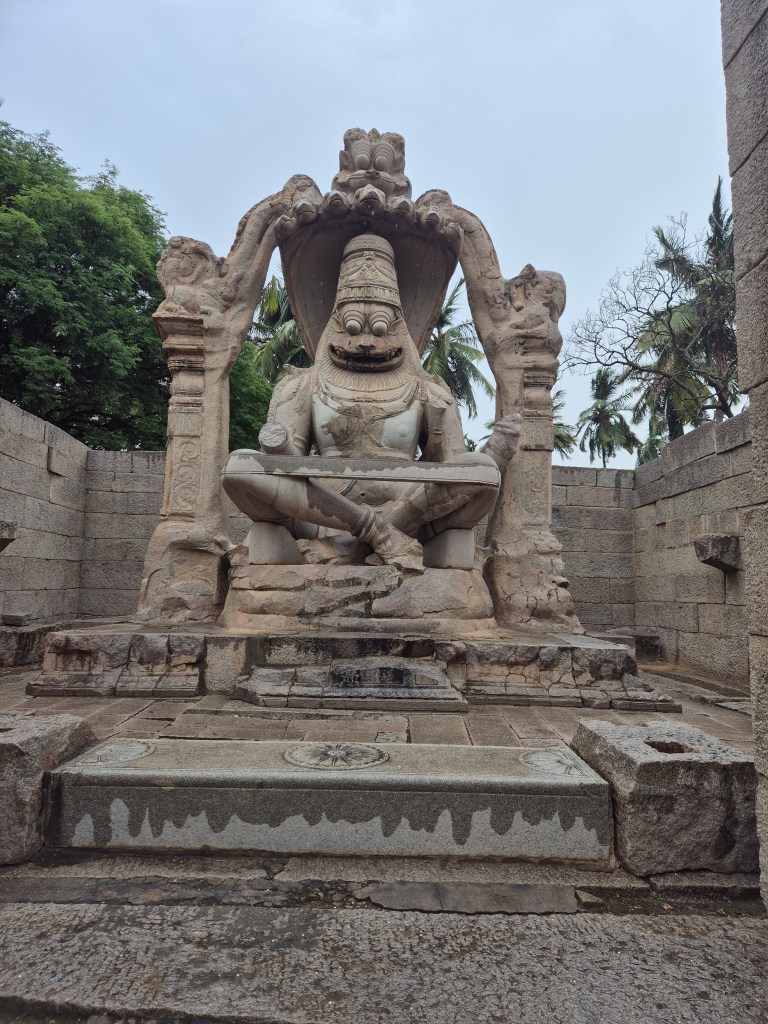
    Our tour guide suggested that we cover the monolith Nrsimha and Shiva Linga on the way to the Virupaksha Temple..

    When we reached the Nrsimha statue, it was still drizzling which added additional majesty to the already majestic monolithic Nrsimha statue.  Worship is not happening at the temple as a limb along with the statue of Lakshmi is broken.  This was built by Krishna Deva Raya in the 16th Century.  It stands 22 feet tall.  Has intricate carvings, with the Adisesha becoming the umbrella in the rain for Nrsimha. 

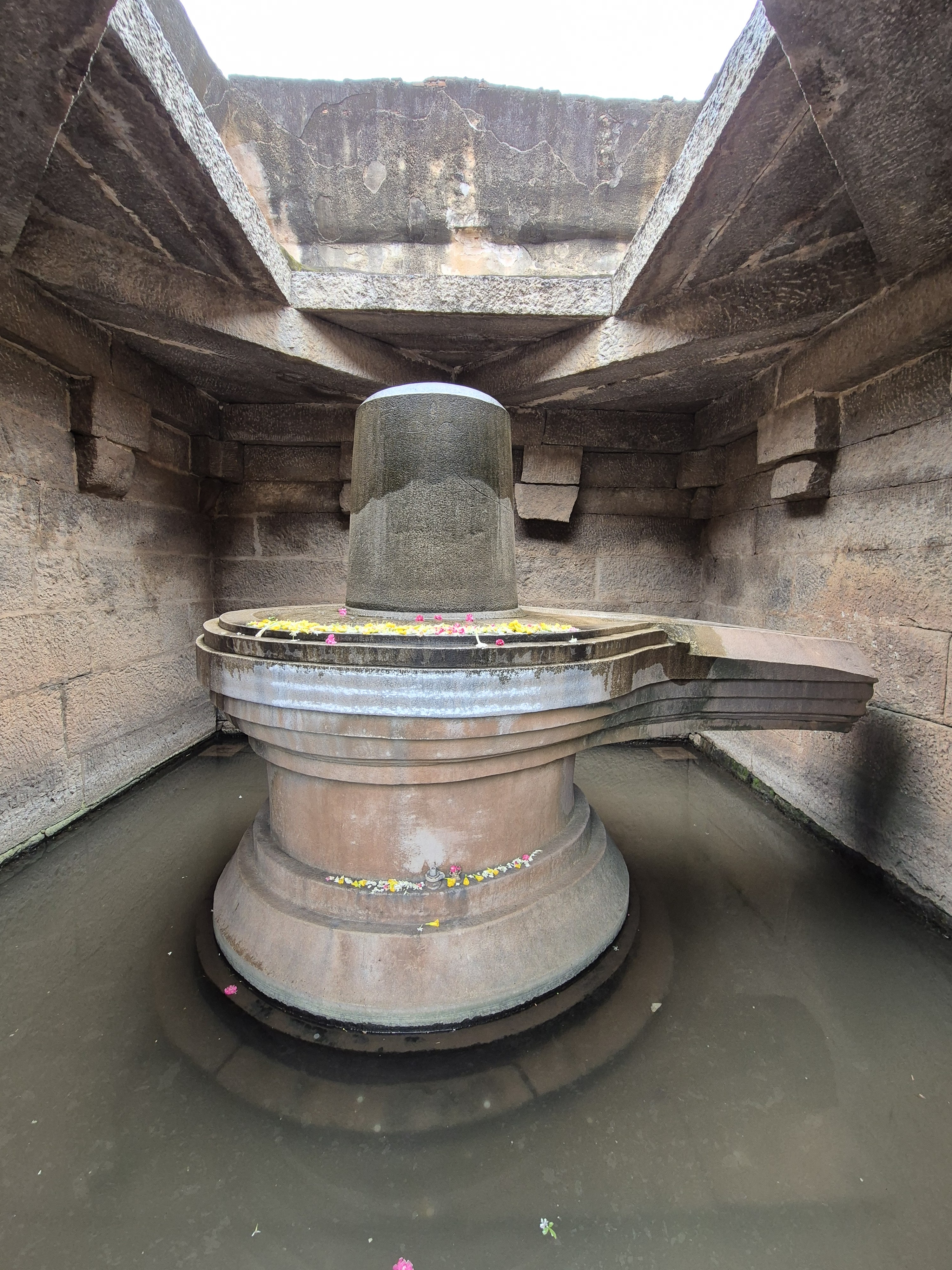
    We took a few pictures and moved on to the Badvalinga, a 10-12 feet Shivalinga which was just a few meters from the Nrsimha.  The shivalinga is partially submerged in the water. The legend has it that this was built by a poor woman (badava).  Unlike the Nrsimha temple, Pooja happens in this temple on a daily basis. 

    Hampi: Badavalinga

    We went to the Krishna temple next. Again an imposing and intricately carved rock structure. The snake structure in the entrance is a kind of a calendar which will identify the solar and lunar eclipse accurately.  There was a huge bazaar.  The size of the bazaar clearly shows the amount of trade that would have happened in the hey days in Hampi.  A huge tax collection box is present showing how trading and tax were colocated.  

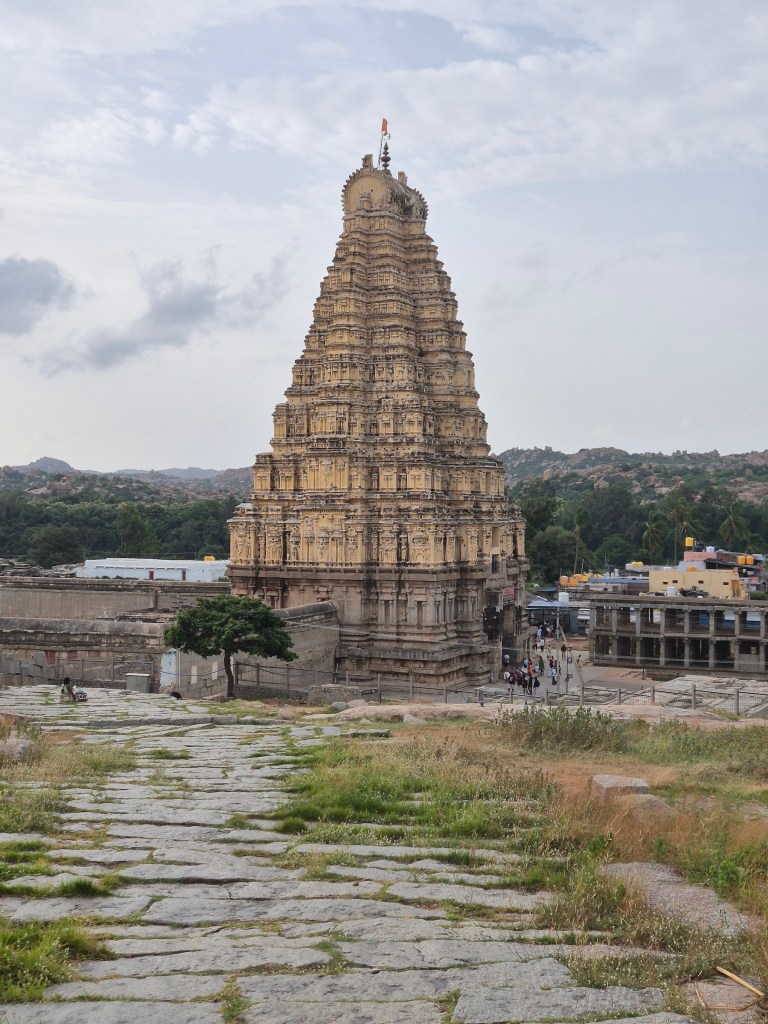
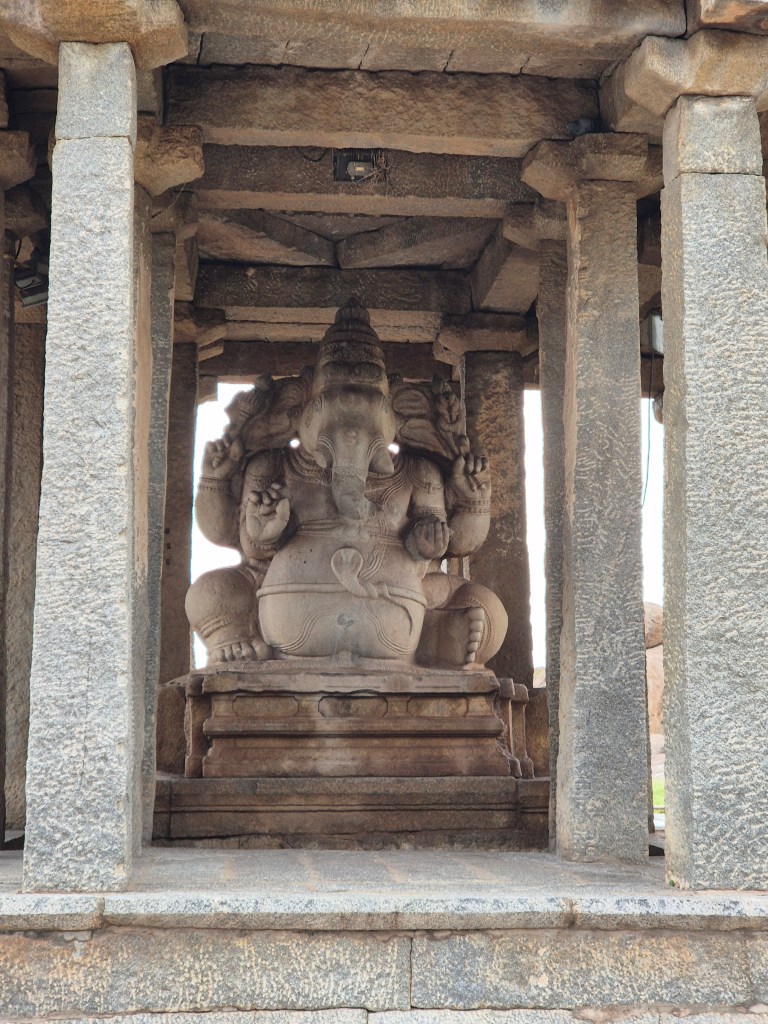
    A short walk we enter the Virupaksha temple complex. Inside the complex, we were first greeted by a large Ganesha statue.  It looked similar to most of the other Ganesha’s we have seen in other temples, till our guide wanted us to have a close look at the 4 hands in the statue asking us if we found anything different. We did not find anything different, until he took us to the back of the statue.  We were amazed to find Ganesha sitting on Parvati’s lap.  Given the size of Ganesha, in the front, we cannot see Parvati at all, except for her two hands, which we misunderstood as the 3rd and 4th hands of Ganesha.  Such a beautiful carving. 

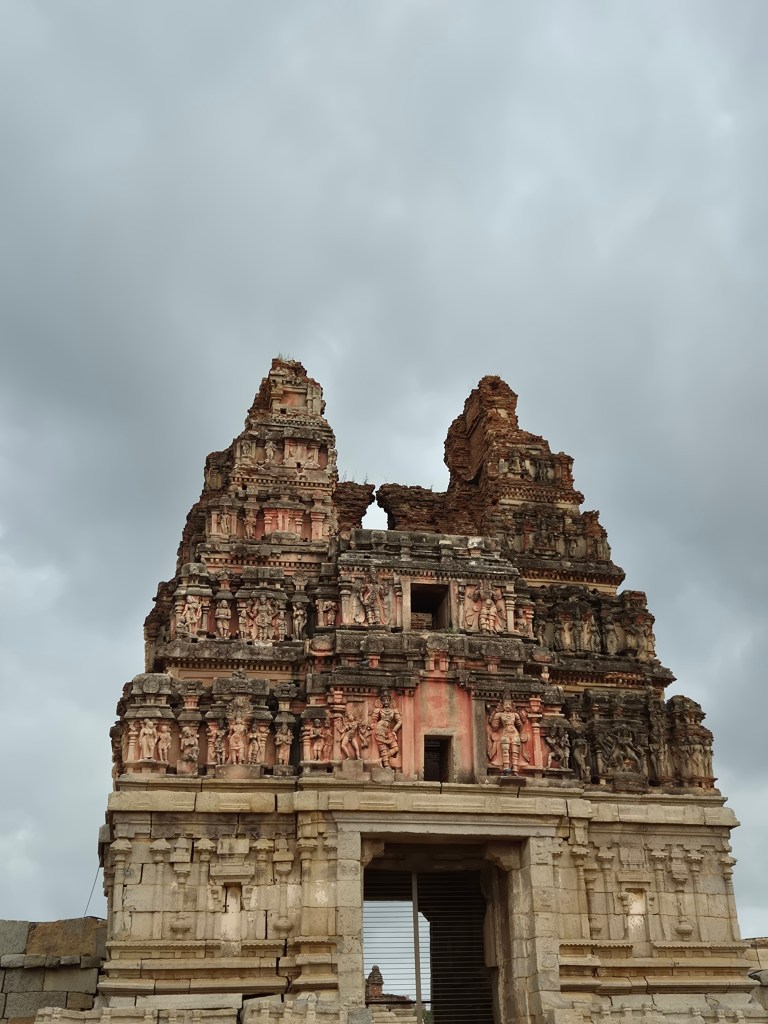
    While the evening was about visiting the Virupaksha temple, we were fully treated to excellent architecture, a bit of history and religion even before entering the temple. And finally we entered the temple. The imposing gopuram with nine levels of structure welcomed us. There is a lot written about the background of the Virupaksha temple, the story of manmadha and rathi for us to read and hence, I am skipping the same. 

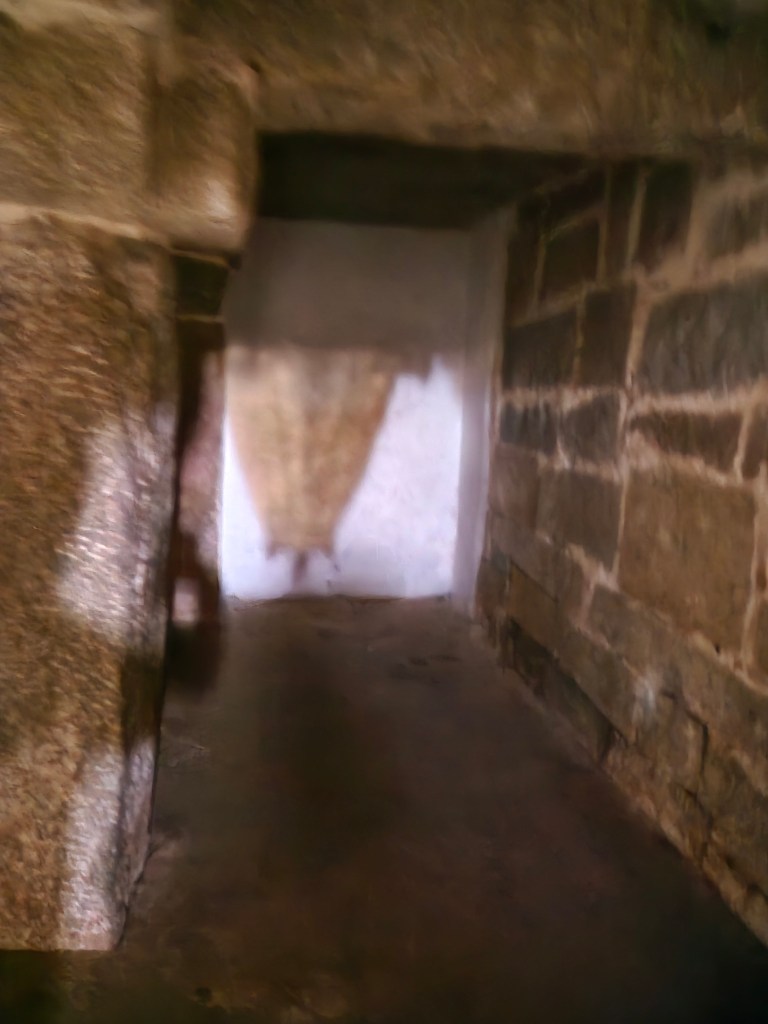
    What attracted my attention is the pin hole which reflected the gopuram on a wall (in the reverse).  The accuracy of the architecture enabling the same is something which one needs to acknowledge.

    When we exited the temple after an excellent darshan, we did a short walk to the Tungabadhra River.  The river was flowing majestically.  We spent some time at the river bed with a bit of rain around. We also witnessed a large group of monkeys being fed by the locals at the temple. 

    We returned back to our resort after a lovely evening at Hampi. I am sure, this experience will bring me back to Hampi again.

  • Hi all, Sridhar (KS) here. I am a startup professional, travel enthusiast, vegetarian foodie, and an amateur photographer. Born and brought up in Chennai where I did all my studies, and started my professional career in financial services world in 1990. I moved to Hyderabad in 1997. A major part of my professional life has been in Hyderabad.

    Both professionally and personally, I am used to my family members, colleagues and friends ask me about wide range of things from where to eat, to how to launch a company. From where to go for the next holiday to preparing for retirement. It is this that urged me to start a blog and name it asks.blog (ask KS with the second k removed).

    I will share my experiences, anecdotes and learning’s here in this blog. I have realised that getting into blogging is not easy. And following or reading a blog is equally difficult. Being aware of that, I will try and make my blogs interesting, crisp and hopefully useful.

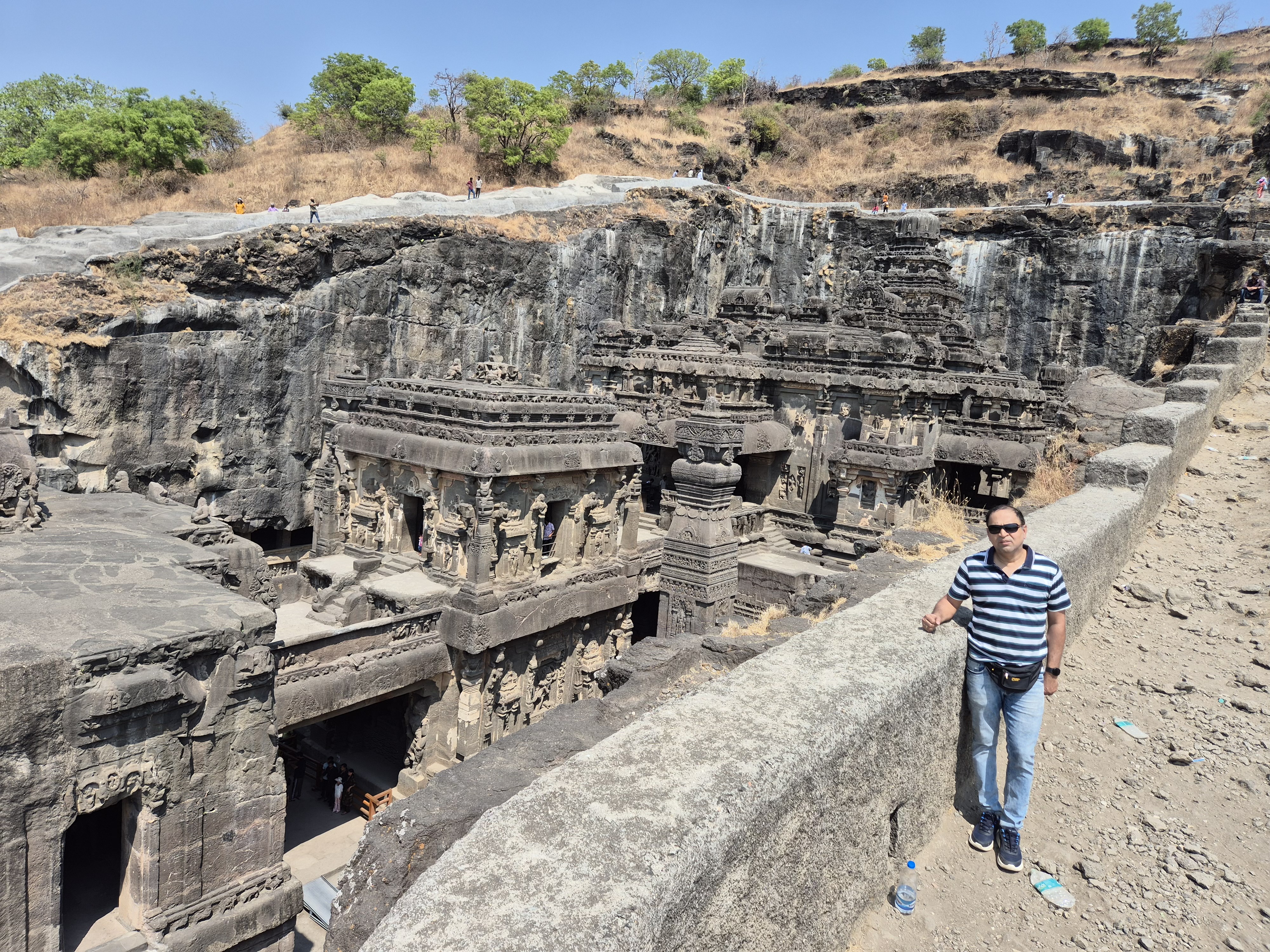
    Me at the Ellora caves | Kailash Temple