We had two Safaris booked for the next day, both at the Zarri Peth Buffer of Tadoba Andhari Tiger Reserve. After the close sighting the previous evening, it would have been easy to expect a repeat performance. But forests rarely operate on expectation.
It’s Mama Again
The morning drive began in a familiar way—steady, quiet, patient. For nearly one and a half hours, there was little to suggest the presence of a predator. No fresh pugmarks. No agitation in the undergrowth. Just filtered sunlight and long stretches of track.
At one point, we stopped at a small forest office to use the washroom and have tea. It felt normal —standing there with paper cups, discussing sightings like cricket scores. Breakfast that day was packed poha from the resort, eaten inside the gypsy while waiting and we received a call from the other jeeps informing us that Mama had been sighted.
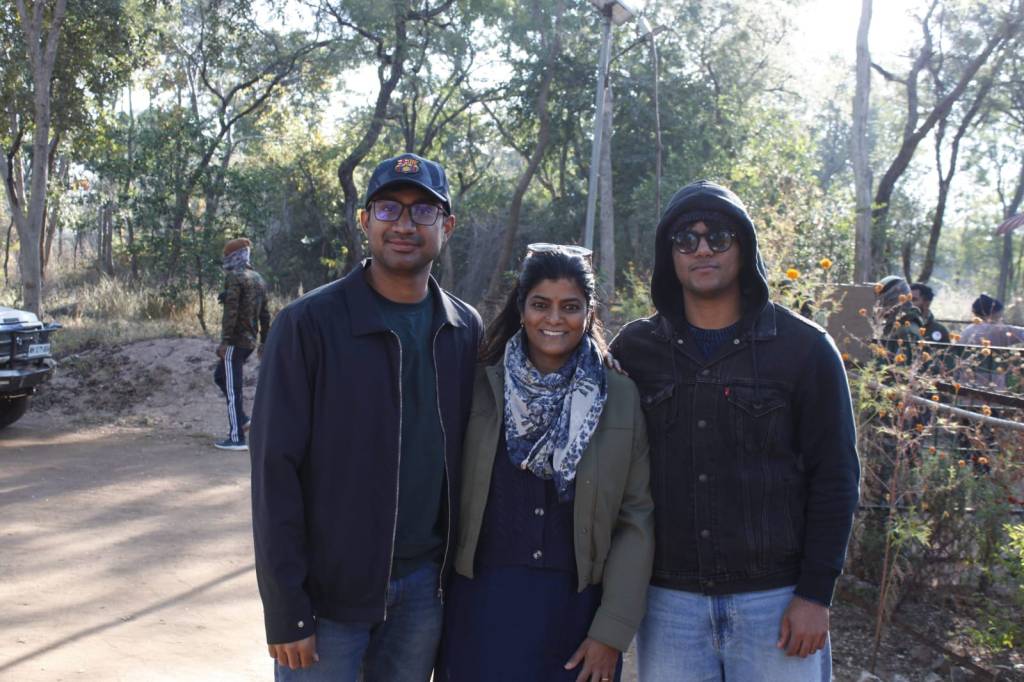
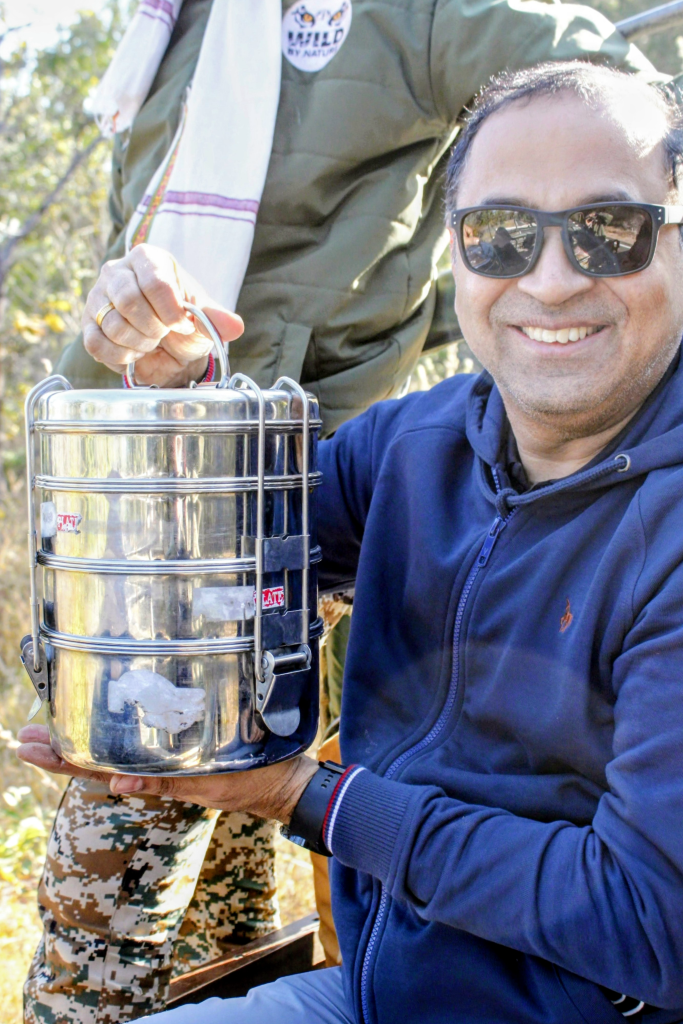
This moment captures the rhythm of a safari well—long stretches of stillness punctuated by short bursts of awareness.
We drove towards the sighting and the area looked very familiar to me. However, the first focus is seeing the tiger. A dozen jeeps were there with cameras clicking and Mama who seems to be deliberately posing for photos.
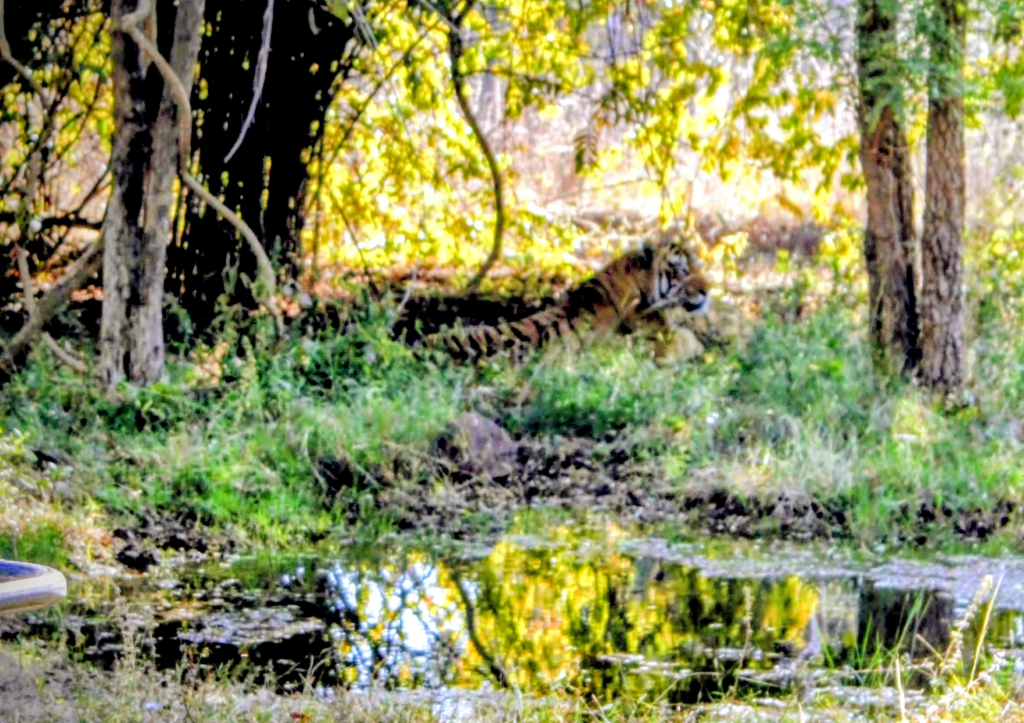
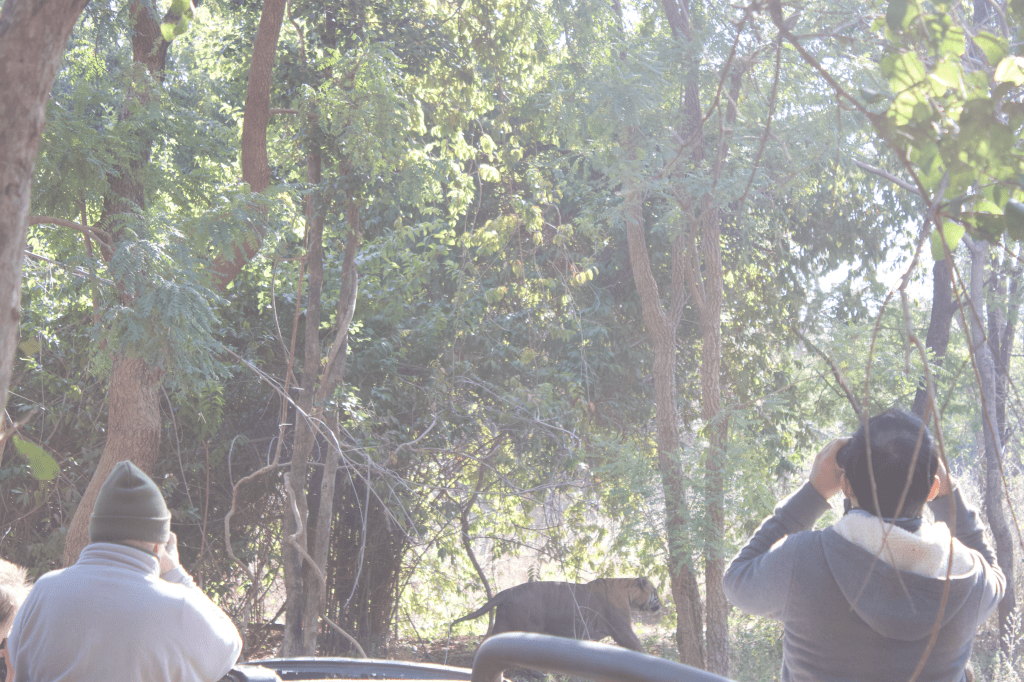
After having got a glimpse of Mama once again, I took my eyes off the tiger to look around as to why the place looked familiar. Then it dawned on me that just 20 minutes earlier, we had stopped there for a washroom and tea break. There was something humbling about that. The tiger had been within a hundred metres while we were standing and chatting a few minutes earlier.
Tracking the Tigress | The Elusive K-Mark
The evening Safari shifted the tone. Our guide suggested that instead of trailing known movement patterns, we look for a tigress that had recently given birth to four cubs. She is known as K-Mark, named for the distinctive “K” shape formed by the stripes on her flank.
Tracking her was different from waiting for a known male. It required reading smaller signs—movement in the grass, the direction of deer, the sudden quiet of birds. For the first time, I began noticing the forest more consciously.
We saw sambar clearly that evening, their posture alert and stiff. A wild boar crossed our path with surprising speed. Indian gaur—massive and unhurried—stood at a distance, their size far more imposing than photographs suggest. The forest felt alive in layers.
And then came the sound.
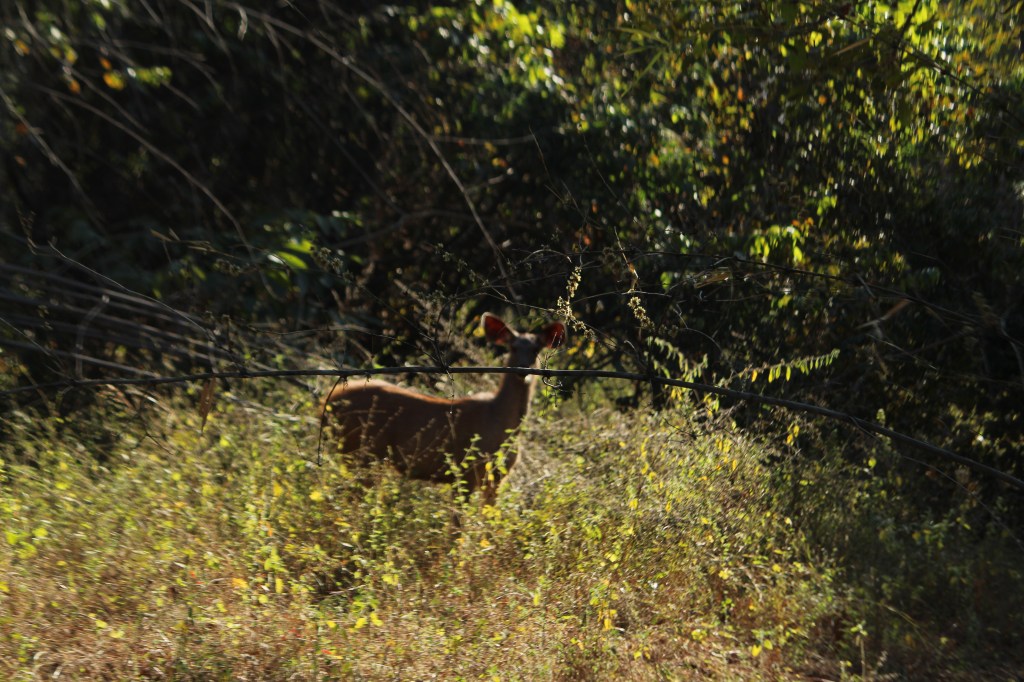
A sambar’s alarm call is unmistakable once you’ve heard it—sharp, repetitive, insistent. It doesn’t confirm a tiger, but it announces a predator. When that call echoed through the trees, conversation inside the gypsy stopped instantly.
The anticipation felt very different from the previous evening. For the first time, the safari felt less like a search and more like participation. We weren’t just hoping for a tiger to appear. We were reading the language of the forest—the way deer react, the way silence shifts, the way tension travels through trees before you see anything at all.
The guides follow an interesting pattern. When they know the approximate location, they split into groups and go to all four side roads of that particular segment, hoping that at some point in time the tiger will come out.
There she came, the K-Mark. We first saw her from behind. She was walking ahead of us, very different from the relaxed attitude of Mama. We could sense a high intensity and attention in each of her steps, clearly looking for food. The tigress was alone as she seems to have come hunting for food for her cubs, who remained hidden somewhere deeper in the forest.
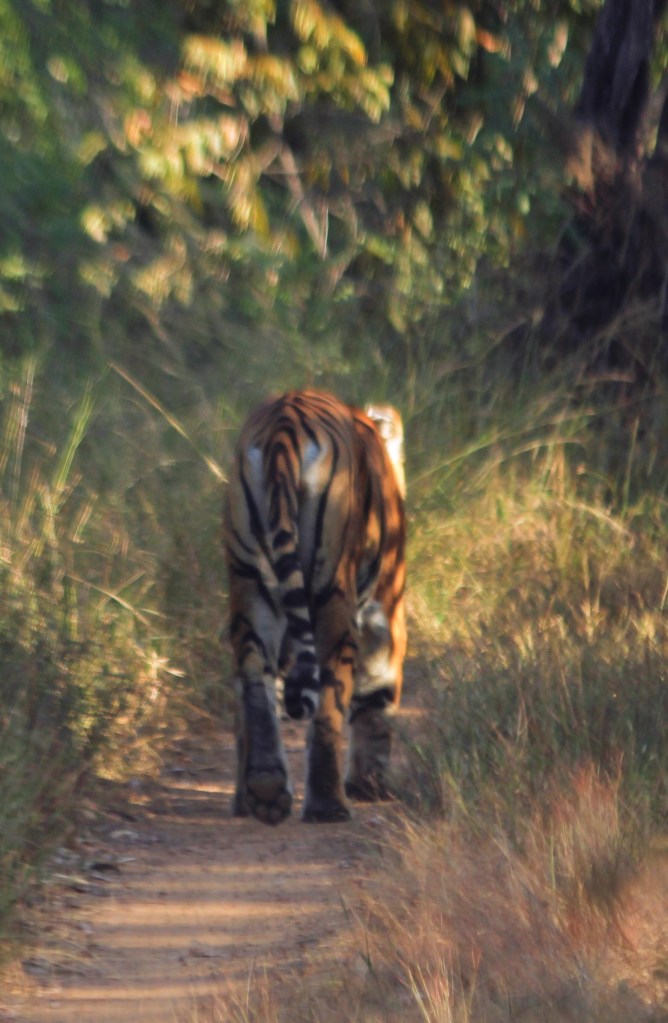
Soon, we lost her in the jungle. Another fifteen minutes passed and we could hear the deer running across and monkeys hurriedly jumping from tree to tree, a sign of K-Mark going for its kill. Then we saw her emerge again from the other side without any food. Maybe she missed her prey. She was walking across to a new segment to find her prey.
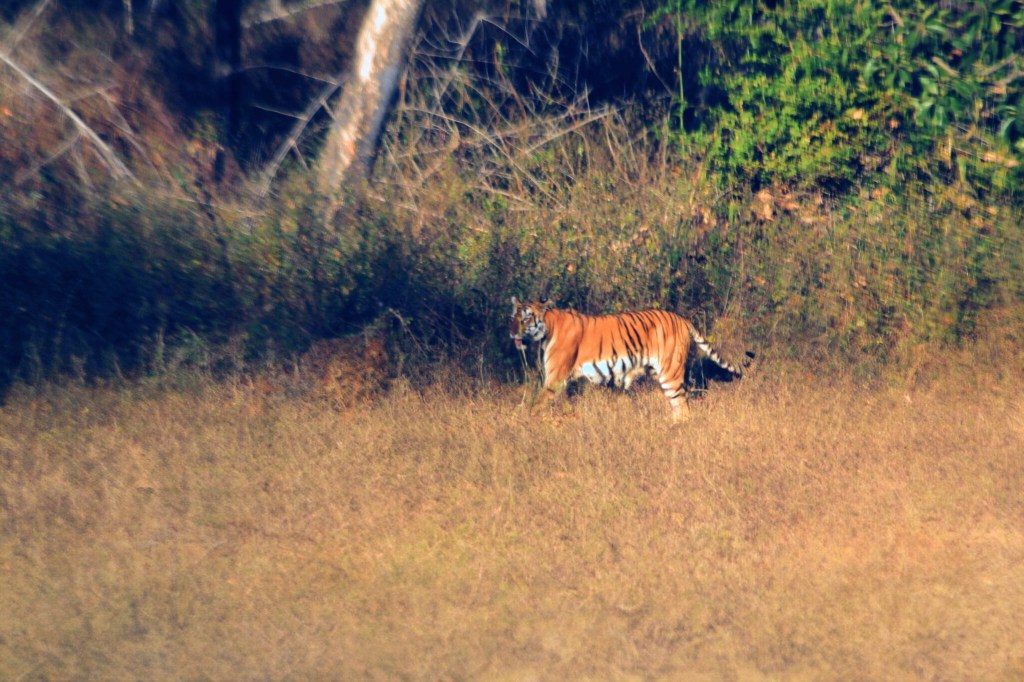
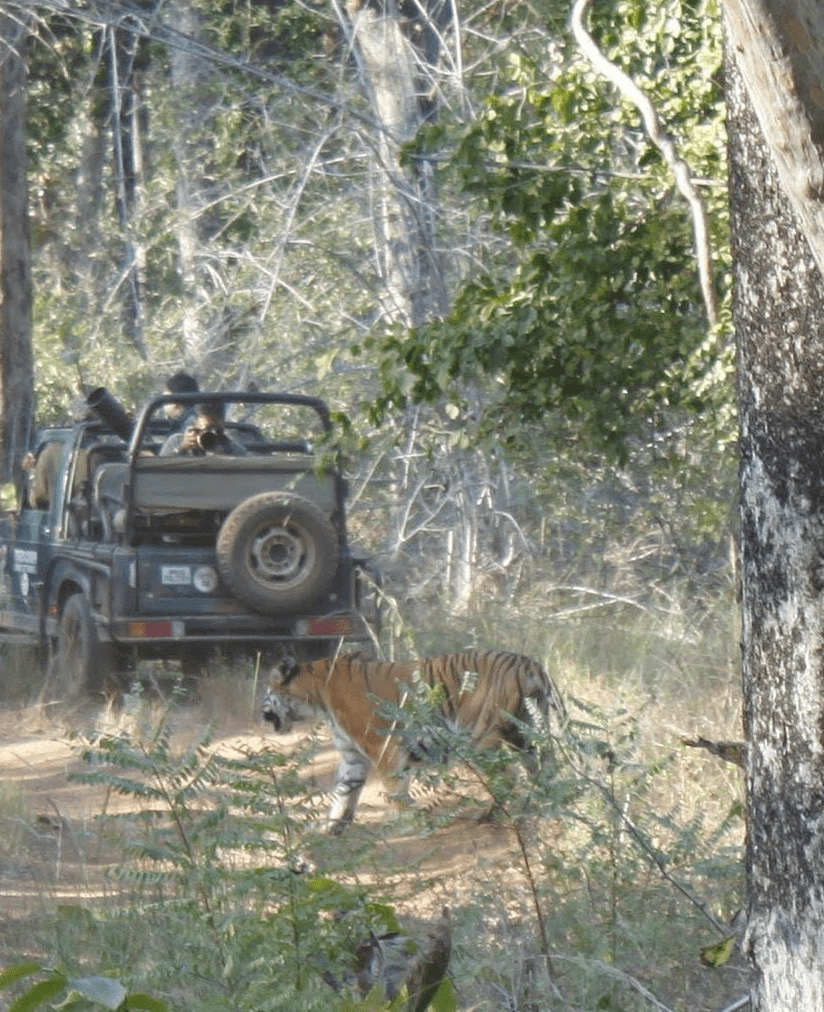
If the first sighting had been about intensity, this one was about awareness.
The buffers had already surprised me with proximity. Now they were teaching patience and focus of a different kind—the kind that stays with you long after the engine switches off.

Leave a comment